
How Extreme Texas Heat Damages Asphalt Shingles over Time
Summers in Texas put more stress on a roof than most homeowners realize. Surface temperatures on a dark asphalt shingle roof can climb past 150 degrees on a 100 degree afternoon, and the deck underneath holds that heat for hours after sunset. That daily cycle of heating and cooling slowly changes both the chemistry and the shape of every shingle on the house. The damage rarely shows up in a single season. It builds quietly across five, ten, and fifteen summers until the roof starts leaking or sheds shingles in the first strong wind. Knowing what heat does to asphalt shingles helps you catch problems while repairs are still small, and it helps you protect the manufacturer warranty that came with your roof.
What Extreme Texas Heat Does to Asphalt Shingles
Asphalt shingles are built from three main parts: a fiberglass mat, a coating of asphalt, and a top layer of ceramic coated granules. Each of those layers reacts to heat differently, and that difference is where the trouble begins. The asphalt coating does the waterproofing, and it stays flexible only while it holds onto its lighter oils. Heat drives those oils out, so the shingle grows stiffer and more brittle with every passing summer. Ultraviolet exposure stacks damage on top of the thermal damage, and the two work together. In North Texas, roofs face this cycle from May through September, which is why shingles here often age faster than the exact same product installed in a cooler climate.
How Extreme Heat Damages the Asphalt Binder in Shingles
The asphalt in a shingle is not a solid in the way concrete is a solid. It behaves more like a very thick liquid that softens as it warms and firms up as it cools. Inside that asphalt sit lighter oils that keep the material pliable. High heat pushes those oils toward the surface, where sunlight and air break them down and carry them off. What remains is a harder, denser asphalt with far less give. A shingle in that condition can no longer flex when the deck moves or when wind lifts an edge. Instead of bending, it cracks.
Thermal cycling makes the problem worse. Every clear day, the roof heats up fast in the morning, peaks in the middle of the afternoon, and drops sharply once the sun goes down. Shingles, decking, and fasteners all expand and contract at different rates through that swing. Over hundreds of cycles, that repeated movement works nails loose from the deck, a condition roofers call nail pops. A popped nail lifts the shingle above it and creates a small opening at the fastener. Water finds those openings during the next thunderstorm. Homeowners often assume a leak came from the storm, when the real cause was months of heat quietly backing a nail out of the plywood.
Heat also affects the sealant strip, the band of adhesive that bonds each shingle to the course below it. That strip is designed to soften in warm weather and bond tightly, which works well during a normal spring. Under sustained extreme heat, the sealant can become so soft that shingles slide slightly out of alignment on steep slopes. Foot traffic during peak afternoon temperatures scuffs granules right off the softened surface, which is one reason careful roofers schedule inspections and repairs for early morning. Once a bond breaks and the shingle cools, the strip does not always reseal at full strength. Those partially sealed shingles are the first ones to blow off in a spring wind event.
Granule Loss on Asphalt Shingles Caused by Extreme Heat
The granules on top of a shingle are not there for looks alone. They act as a shield, absorbing ultraviolet light before it ever reaches the asphalt underneath. They also contribute to the fire rating of the roof covering and reflect a portion of solar energy back into the sky. A shingle with a full, even granule layer ages at a predictable rate. A shingle missing granules ages several times faster in the bare areas. That is why granule loss is one of the most important things a roofer looks for during a summer inspection.
Extreme heat loosens the grip that the asphalt has on those granules. Granules are pressed into the asphalt while it is hot at the factory, and the bond depends on the asphalt staying stable. As the binder hardens and shrinks over years of Texas summers, granules lose their footing and wash away with the next heavy rain. You will see the evidence in the gutters, on splash blocks, and in the driveway at the base of a downspout. A light amount of granule shedding is normal on a new roof and comes from loose material left over from manufacturing. Steady accumulation on a roof that is eight or ten years old is a different story, and it points to a surface that is wearing thin.
Once bare patches appear, the aging curve steepens quickly. Sunlight hits the exposed asphalt directly, dries it further, and the fiberglass mat begins to show through as a dull gray or black area. Those spots turn brittle, crack under the next hail event, and often fail long before the rest of the slope. Bald areas also shed water differently, which can channel runoff toward one section of the roof and overload it. Checking your gutters twice a year gives you a simple, free measurement of how your roof is holding up. If you scoop out a handful of granules each cleaning, the roof is telling you something worth listening to.
Curling, Blistering, and Cracking in Heat Damaged Asphalt Shingles
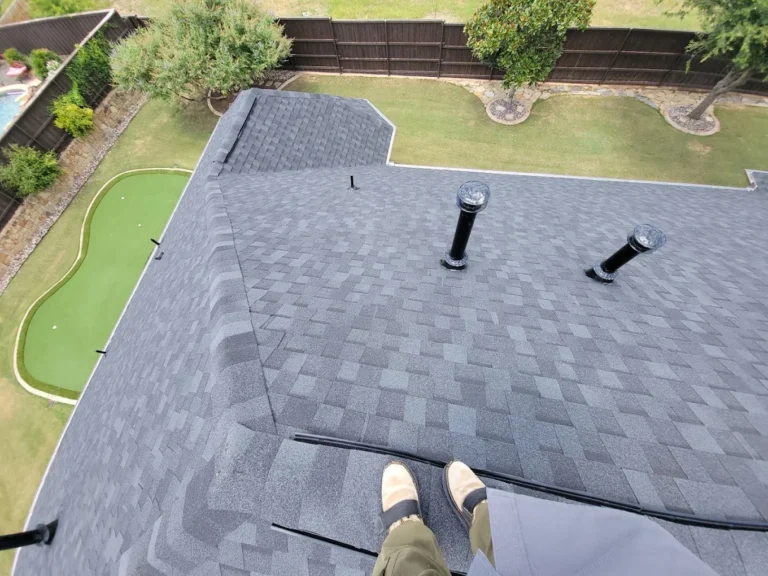
Curling is the most recognizable sign of a roof that has cooked. Shingles curl in two patterns: cupping, where the edges turn upward, and clawing, where the center lifts while the edges stay down. Both come from the shingle shrinking and hardening as it loses its oils, and both are made worse by an attic that runs hot. A curled shingle no longer lies flat against the course below, so wind can get underneath it. Water can also drive up and behind the raised edge during a sideways rain. Once curling shows up across a large section of a slope, spot repairs stop being practical and replacement becomes the honest recommendation.
Blistering looks different and often gets misread. Blisters are small raised bumps on the shingle surface, caused by moisture or gas trapped in the asphalt during manufacturing that expands when the roof gets very hot. When a blister pops, it leaves a round crater with the granules missing. Those craters look a great deal like hail bruises to an untrained eye, and that resemblance matters when an insurance claim is on the line. An experienced inspector can tell the two apart by the pattern, the edges of the mark, and the condition of the mat underneath. Blistering is a heat and manufacturing issue, not a storm issue, so identifying it correctly keeps a claim honest and keeps a homeowner from being surprised.
Cracking and thermal splitting show up last, usually on roofs past the middle of their service life. Straight cracks that run across a shingle or through several shingles in a line come from the material contracting faster than it can stretch. You will often find them on the slopes that take the hardest afternoon sun. A cracked shingle has lost its waterproofing at that point, and the fiberglass mat wicks water into the layers below. Brittle shingles also perform poorly during hail, since a hardened shingle shatters where a flexible one would absorb the strike. Heat damage and storm damage are connected in that way, and a roof weakened by five hot summers takes far more damage from the same hailstorm than a roof in good condition.
Warning Signs of Heat Damaged Asphalt Shingles on a Texas Roof
Most heat damage announces itself well before a leak appears. The trick is knowing where to look and what normal wear looks like at each stage of a roof’s life. A ten year old roof in Bedford should still lie flat, hold most of its granules, and show even color across each slope. Anything that varies sharply from slope to slope deserves a closer look. Homeowners can safely check several of these signs from the ground and from inside the attic without ever climbing a ladder. Anything that requires walking the roof should be left to a professional, since a hot shingle scuffs easily and a hot roof surface is genuinely dangerous.
Heat Damaged Asphalt Shingle Signs You Can See From the Ground
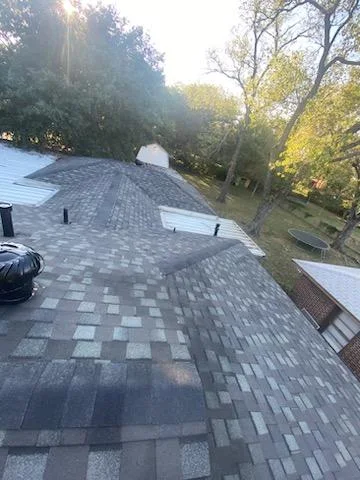
A pair of binoculars turns a driveway into a decent inspection platform. Stand back far enough to see a full slope and scan for shingles that sit higher than their neighbors, since that irregular texture usually means curling or a lifted fastener. Look for shiny or slick looking patches, which often indicate exposed asphalt where granules have worn away. Note any color inconsistency, especially dark streaks or gray areas that break up an otherwise uniform field. Pay attention to the lines of the roof as well, because the courses should run straight and parallel. Waves, dips, or shingles that appear to sag between rafters can point to a deck problem underneath.
Your gutters give the second reading. Pull the downspout splash block aside and look at what has collected there after a rain. A cup of granules is a warning; a steady pile every season on an older roof is a strong signal that the surface layer is failing. Check the driveway and the flower beds along the drip edge for the same gritty material. While you are there, look at the gutters themselves for sagging, separated seams, or fasteners pulling free, since summer heat expands metal and stresses those connections too. Gutters and roofs age together, and problems in one frequently reveal problems in the other.
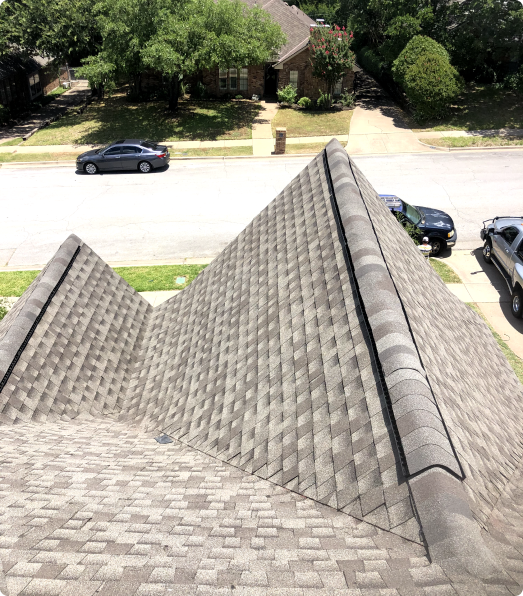
Compare slopes before you draw conclusions. The south and west facing sections of a Texas roof absorb far more solar energy than the north side, so they almost always show wear first. If the north slope looks healthy while the west slope looks tired, heat is the likely cause rather than a defect or an installation error. Ridges and hips take extra punishment because they sit at the highest point and catch sun from more angles. Check any area around vents, pipe boots, and skylights as well, since the rubber and sealants there break down under ultraviolet exposure faster than the shingles do. A cracked pipe boot is one of the most common heat related leaks in North Texas, and it is also one of the least expensive to fix.
Attic Clues That Point to Heat Damaged Asphalt Shingles
Your attic tells you what the roof cannot. On a summer afternoon, a properly ventilated attic in this region should run somewhere in the neighborhood of 10 to 20 degrees above the outdoor temperature. An attic that feels like an oven and measures 140 degrees or more is baking the underside of your shingles all day long. That trapped heat cooks the asphalt from both directions and cuts years off the roof’s service life. A simple thermometer left in the attic for an afternoon gives you a useful number. Take that reading in the morning, before the space becomes unsafe to enter.
Look at the underside of the roof deck with a flashlight. Dark staining on the plywood, rusted nail shanks poking through, or white crystalline deposits all indicate that moisture and heat are collecting where they should not. You may also spot daylight coming through at seams or around penetrations, which means the assembly above has openings. Run a hand along the insulation at the outer edges of the attic near the eaves and confirm it is not packed against the roof deck. Blocked soffits are one of the most common causes of superheated attics in homes with blown insulation. Baffles installed at each rafter bay keep an air channel open and cost very little compared to a premature roof replacement.
Pay attention to what the space smells and feels like too. A musty odor suggests moisture that never dries out, which combined with heat accelerates deck decay. Press gently on the underside of the decking in a few spots; solid plywood feels firm, while soft or spongy areas signal water intrusion and rot. Note any sagging between rafters, since that usually means the deck has absorbed moisture repeatedly. Keep attic visits short during summer, wear a mask, and step only on the joists. If anything you find looks questionable, a professional inspection is safer and far more thorough than a second trip up there.
How Attic Ventilation Slows Heat Damage to Asphalt Shingles
Ventilation is the single most effective defense against heat damage on an asphalt shingle roof. The concept is simple: cool air enters low at the soffits, warms as it rises, and exits high at the ridge. That continuous flow carries heat out of the attic before it can build. Building codes generally call for one square foot of net free ventilation area for every 150 square feet of attic floor, and that ratio can be reduced to one in 300 when a vapor retarder is present and intake and exhaust are properly balanced. Net free area is not the same as the size of the vent opening, since screens and louvers block part of the flow. Sizing the system correctly requires doing the math, not eyeballing it.
Balance matters as much as total capacity. A roof with plenty of ridge vent but blocked or undersized soffit intake will pull air from the conditioned space below instead of from outside, which wastes energy and does little to cool the deck. Mixing exhaust types creates a similar problem. A powered fan installed on a roof that already has ridge vents will often draw air backward through the ridge rather than up from the soffits, short circuiting the whole system. Intake and exhaust should be roughly equal, with intake at least matching exhaust. Getting that relationship right frequently makes a bigger difference than adding more vents.
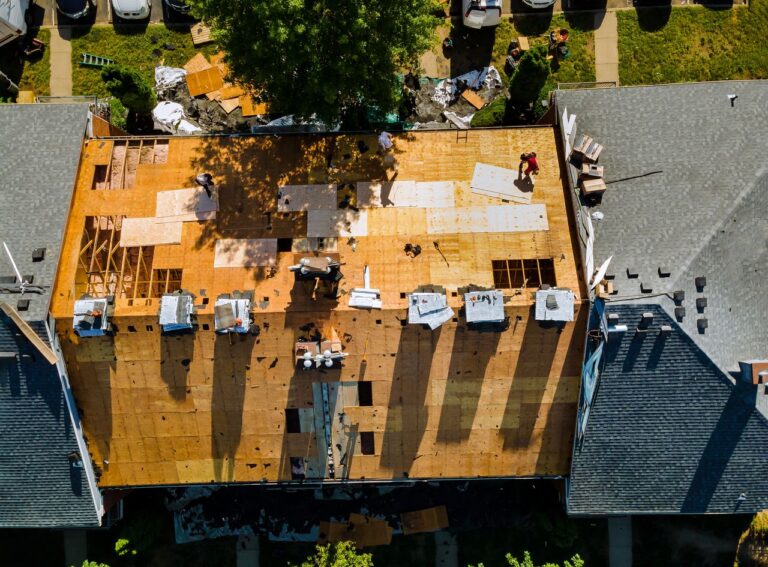
Good ventilation pays off in three ways. It lowers the temperature of the roof deck and the shingles above it, which slows the loss of those critical asphalt oils. It reduces moisture buildup that rots decking and rusts fasteners. It also trims cooling costs, since an attic at 120 degrees puts far less load on your air conditioning than one at 150. Most shingle manufacturers require adequate ventilation as a condition of their warranty coverage, so a poorly vented attic can void protection you already paid for. Correcting ventilation during a roof replacement costs a fraction of what the replacement itself costs and protects that investment for decades.
Why You Need a Heat Damage Roof Inspection Before Storm Season
Texas homeowners tend to call a roofer after a storm, which is understandable but backward. A roof already weakened by summer heat takes substantially more damage from hail and wind than a roof in sound condition. Finding and fixing heat related wear now means your roof enters the next round of severe weather with its full strength intact. It also creates a documented record of your roof’s condition, which strengthens any insurance claim you may need to file later. TM Roofing & Construction Group provides free estimates and is available 24/7 for homeowners across Bedford and the surrounding communities.
What a Heat Damage Roof Inspection Covers
A thorough inspection starts on the roof surface and works through every component. Our team checks shingle condition slope by slope, documenting curling, granule loss, blistering, cracking, and any shingles that have lost their seal. We examine flashing at walls, chimneys, and valleys, since metal expands and contracts hard in summer and loosens over time. Pipe boots, vent collars, and skylight seals get individual attention because ultraviolet exposure destroys rubber and sealant faster than anything else on a roof. Everything is photographed so you can see exactly what we see.
The inspection continues inside. We evaluate attic temperature, insulation coverage, soffit intake, and exhaust capacity to determine if the ventilation system is actually working. Decking gets checked for staining, rot, and sagging that would need attention before any new material goes down. We look at fastener condition and note nail pops that have worked loose through repeated thermal cycling. These interior findings often explain surface problems that would otherwise seem random.
You receive a clear report with findings and options, not a sales pitch. Some roofs need nothing more than a few sealant repairs and better soffit intake. Others are far enough along that replacement is the responsible recommendation, and we will explain exactly why. If storm damage is present alongside the heat wear, we distinguish between the two so your claim reflects reality. Honest assessments are the foundation of how this company operates.
When to Schedule a Heat Damage Roof Inspection in Texas
Late summer and early fall are the ideal windows for a heat damage inspection. By August, your roof has absorbed the full brunt of the season and any weaknesses have revealed themselves. Scheduling before autumn storms and the next spring hail season gives you time to complete repairs without pressure. Early morning appointments are safest and best for the shingles, since walking a roof at 150 degrees causes scuffing.
Certain situations call for an inspection sooner. Roofs that are more than eight years old, homes that have never had the attic ventilation evaluated, and properties where granules keep showing up in the gutters all justify a call now. The same goes for any home purchased in the last year where the roof age is unknown. Small problems found early cost a fraction of what the same problems cost after they cause interior damage.
Regular inspections also protect your manufacturer warranty. Most warranties require proper ventilation and reasonable maintenance, and documentation helps prove both. Annual or biannual checks build a history for your property that pays off during claims and at resale. TM Roofing & Construction Group offers free estimates, so having your roof looked at costs you nothing but a little time. Flexible financing is available when work is needed and the timing is inconvenient.
Why Choose TM Roofing & Construction Group for Heat Damaged Roof Repair
TM Roofing & Construction Group is locally owned and operated, and we treat every home the way we would treat our own. More than 600 Facebook reviews from homeowners across the area reflect how we handle the work and how we handle people. We are accredited by the Better Business Bureau, which means our practices are reviewed by an outside standard rather than a slogan. Our crews know exactly how North Texas heat behaves and what it does to roofing materials over a decade. That local experience shapes every recommendation we make.
Our work is backed on both sides. We install systems eligible for lifetime manufacturer warranties, and we stand behind our own labor with a 10 year workmanship guarantee. Insurance claims are a specialty here, and our team handles documentation, adjuster meetings, and the paperwork most homeowners dread. We also apply $500 toward your deductible on qualifying claims. Flexible financing keeps a necessary roof from becoming an impossible decision.
Call TM Roofing & Construction Group at (817) 820-9596 to schedule a free heat damage inspection. Our office is located at 1301 Schumac Ln, Bedford, TX 76022, and you can reach us by email at tmconstructiongroup@mail.com. We are available 24/7 for emergencies, and we answer the phone when you call. Your roof has already worked hard this summer. Let us make sure it is ready for what comes next.