Why Fall Is the Best Time of Year to Replace a Roof in Texas
Fall is the season North Texas homeowners should circle on the calendar for a roof replacement. Daytime highs settle into a range that lets asphalt shingles seal the way the manufacturer designed them to, and overnight lows rarely drop far enough to cause installation problems. Hail season has passed by then, so crews are no longer working through a backlog of emergency tarping and claim inspections from the spring storms. Rainfall in October and November is usually lighter and easier to forecast than the volatile spring pattern, which keeps a tear off from stalling with an open deck. Homeowners also get the practical benefit of finishing the job before the first hard freeze of the year arrives. A roof installed in October protects a house through every ice storm, wind event, and cold front that shows up between December and March. Timing matters more in Texas than it does in most states because the temperature swings here run to both extremes within the same twelve months. Landing the work in the middle of that swing produces a stronger, better sealed roofing system that performs for decades.
What Makes Fall the Best Time of Year to Replace a Roof in Texas
The advantages of a fall roof replacement come down to three things: temperature, weather stability, and contractor availability. Asphalt shingles are not simply nailed down and forgotten; they rely on a heat activated adhesive strip that bonds each course to the one below it. That bond is what gives a roof its wind rating, and it forms best when surface temperatures sit in a moderate range with a few days of sun behind it. Fall in Dallas and Fort Worth delivers exactly that, usually from early October through late November. The same window also brings fewer rain delays, which means fewer days with your home under synthetic underlayment instead of finished shingles. Crews work faster and safer when they are not standing on a surface radiating heat at 140 degrees. Every one of those factors shows up later in the form of a roof that holds shingles tight through the next storm season.
Fall Temperatures Help Shingles Seal During a Texas Roof Replacement
Every asphalt shingle made today carries a factory applied strip of sealant along its face or back edge. That strip stays inert until sunlight and ambient heat warm it enough to soften and grab the shingle above it. Once it bonds, the shingle course becomes a continuous sealed layer rather than a set of loose tabs. Manufacturers generally want surface temperatures around 70 degrees with direct sun exposure over a few consecutive days for a full bond to develop. North Texas hits that range consistently from the first week of October into the middle of November. The sun angle in fall is still strong enough to warm a south facing slope through most of the afternoon. That combination gives you a sealed roof within days of installation rather than weeks.
Cold weather installation is where this process breaks down, and it is a real concern in this region from December through February. When shingle surfaces stay below roughly 40 to 50 degrees, the sealant strip never softens enough to activate on its own. Reputable contractors handle that by hand sealing with asphalt roof cement under each tab, which adds labor and cost to the job. Even done correctly, hand sealing is a workaround rather than the designed method. Cold shingles are also more brittle, so they can crack along the fiberglass mat when a nail gun drives through them or when a worker steps in the wrong spot. Some manufacturers place specific conditions in their warranty language about installation temperature and hand sealing requirements. Scheduling in fall removes the entire question from your project.
Extreme heat causes the opposite problem, and Texas summers push shingles well past their comfortable working range. When surface temperatures climb above 150 degrees on a July afternoon, the asphalt in the shingle softens to the point that foot traffic leaves scuff marks and granule loss behind. Those scuffs are more than cosmetic; every granule that comes loose exposes a small patch of asphalt to ultraviolet light, which is what ages a roof over time. Crews also have to slow down and take more frequent breaks in that heat, which stretches a two day project into three or four. Nails driven into overly soft shingles can sink too deep and cut through the mat, weakening the fastener hold. Fall temperatures sit in the middle of both extremes, firm enough to resist scuffing and warm enough to seal. That balance is the single strongest technical argument for a fall roof replacement in Texas.
Fall Weather Patterns Keep a Texas Roof Replacement on Schedule
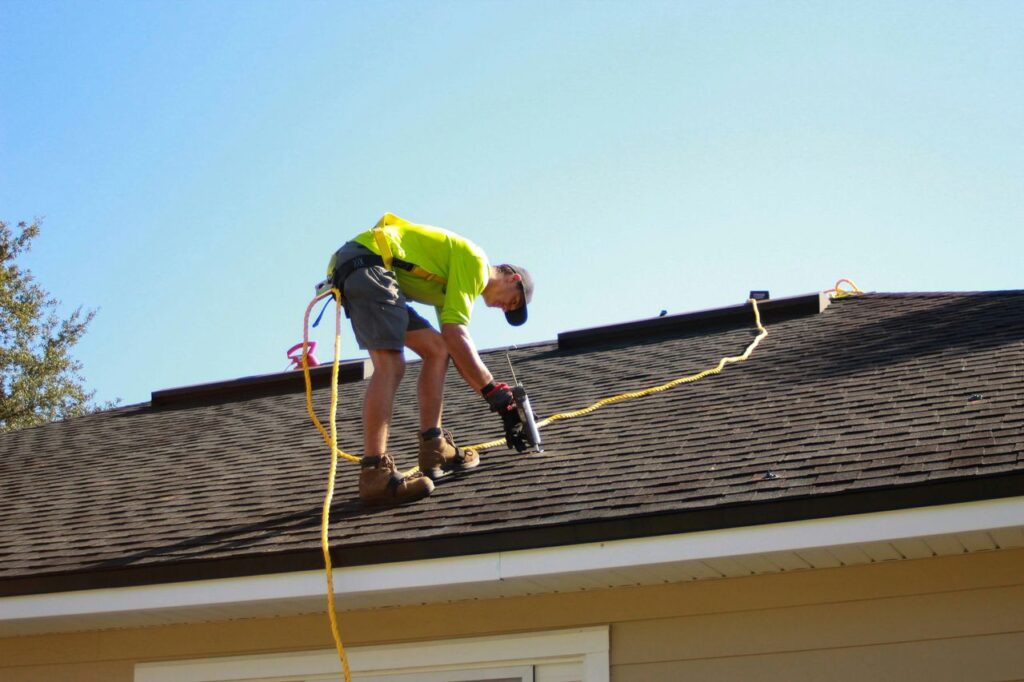
A roof replacement involves a window of time when your home is protected by underlayment rather than a finished roofing system. Good crews dry in every section they open, so a surprise shower does not put water in your living room. Still, no contractor wants a house sitting in that condition longer than necessary, and rain delays are the most common reason a project stretches out. Spring in North Texas brings the most unstable weather of the year, with strong cold fronts colliding against Gulf moisture almost weekly. October and November average noticeably less rainfall and fewer severe thunderstorm days across the Dallas and Fort Worth area. Fronts still move through, but they tend to be drier and easier to forecast several days out. Scheduling in that window gives your project team a realistic shot at finishing within the estimated timeline.
Wind is the other weather factor that shapes a replacement schedule, and fall generally cooperates there as well. Crews cannot safely handle large sheets of synthetic underlayment or run a tear off in sustained gusts above about 25 miles per hour. Spring squall lines and summer outflow winds create those conditions on short notice, sometimes without much warning in the morning forecast. Fall wind events in North Texas typically arrive with a recognizable frontal passage, giving a crew a full day or more to plan around them. That predictability lets a project manager sequence the tear off, deck repair, dry in, and shingle installation without leaving anything half finished overnight. It also means less material blowing across your yard and your neighbor’s property. The result is a cleaner job site and fewer surprises for everyone involved.
Humidity plays a quieter role, and it deserves a mention because it affects the deck underneath your shingles. When a roof is opened for a tear off, the decking gets exposed to outside air for the first time in years. High humidity slows the drying of any damp sheathing found around old leaks, valleys, or plumbing boots. Fall air in North Texas runs drier than summer air, so damp spots on the deck dry more quickly once the old roof comes off. That matters because installing new underlayment over wet sheathing traps moisture in the assembly and invites rot and mold growth. A crew working in October has a much better chance of laying dry in materials over a genuinely dry deck. Small details like that determine which roofs make it to year twenty five in good shape. Ready to get your replacement scheduled during the best window of the year? Click here for our roof replacement and roofing services.
Fall Timing Beats Summer Heat and Winter Cold for a Texas Roof Replacement
Every season in Texas has a specific drawback for roofing work, and understanding them makes the fall advantage easier to see. Summer brings the heat problems already described, plus the highest demand for emergency repairs after late season storms. Winter brings brittle shingles, sealant that will not activate, and short daylight hours that limit how much a crew can accomplish each day. Spring brings hail, wind, and the annual surge of claim inspections that fills every reputable contractor’s calendar for months. Fall sits in the clear space between those pressures, with moderate temperatures and a manageable workload for local crews. That availability translates into faster scheduling and more attention on your specific project. It also means the crew showing up at your house is not rushing to squeeze in three more roofs before dark.
Daylight hours matter more than most homeowners expect when comparing seasons. A full replacement on an average home in Bedford or Hurst usually takes one to three days depending on square footage, pitch, and layers. In late December, useful working daylight in North Texas runs a little over nine hours, and the first two of those are often too cold to install shingles properly. In October, crews get closer to eleven and a half hours with comfortable working temperatures through most of them. That extra time compresses the project and reduces the number of days your home sits in a partially finished state. Fewer working days also means fewer setup and cleanup cycles in your driveway. Homeowners with young children or pets tend to appreciate that difference quite a bit.
Material handling and delivery also run more smoothly in the fall months. Shingle bundles stored in a hot truck or staged on a roof deck in August can soften and stick together, which makes them harder to separate cleanly. Bundles handled in cold weather get stiff and crack more easily during loading and placement. In fall conditions, bundles stay flexible and intact from the delivery truck to the ridge. Supply chains at local distribution yards are also less strained after the spring rush works its way through the system. That improves the odds of getting the exact shingle line and color you selected rather than a substitute. Small logistical wins add up to a cleaner installation and a better looking finished roof.
How to Plan a Fall Roof Replacement in Texas Before Winter Arrives
Planning a fall replacement works best when you start the process in late summer rather than after the first cold front. Inspections, insurance claims, material selection, and permitting all take time, and each step depends on the one before it. Homeowners who wait until November often find themselves pushed into December, which puts the project back into cold weather territory. Starting in August or September gives you room to handle a claim, review options, and lock a date in the ideal window. It also creates space to address related work like gutters, decking repairs, and attic ventilation while the roof is open. A properly sequenced project handles all of that in one mobilization instead of three separate service calls. The goal is a finished, sealed, fully warranted roof on your home before Thanksgiving.
Scheduling Your Fall Roof Replacement in Texas Around Hail Claim Deadlines
North Texas sits in one of the most active hail corridors in the country, and the peak of the season runs from March through June. Damage from a spring storm often goes unnoticed because hail bruising does not always produce an immediate leak. A bruise crushes the mat and knocks granules loose, which starts a slow failure that shows up months or years later. Many homeowners only discover the damage when a roofer inspects the roof for another reason entirely. Fall is the natural time to catch it, since the storms have passed and the evidence is still fresh enough to document. An inspection in September or October gives you time to act before any policy deadline creates a problem. Waiting until the following spring can cost you the claim entirely.
Insurance policies in Texas typically require prompt notice of a loss, and most carriers apply a filing window measured from the date of the storm rather than the date you noticed the damage. Depending on the policy language, that window is commonly one to two years, and it is not negotiable once it closes. Texas law also sets specific notice requirements before certain claim disputes can move forward. None of that is a reason to panic, but it is a strong reason to have a professional look at your roof the same year a storm hits your neighborhood. A documented inspection creates a record with photographs, measurements, and dates that supports your claim. Adjusters respond better to organized evidence than to a general description of damage. Getting that documentation in the fall keeps every option open.
Working with a contractor who handles claims regularly makes the process considerably easier to navigate. A qualified roofer can identify the difference between hail bruising, mechanical damage, blistering, and normal granule loss from age. That distinction determines what a claim covers and what it does not, and getting it wrong wastes everyone’s time. An experienced team will also meet the adjuster on site, walk the roof together, and point out damage on soft metals like gutters, vents, and flashing that supports the overall claim. Supplements for code required items such as drip edge, ice and water shield at valleys, or proper ventilation are common and legitimate. Homeowners rarely know to ask for those items on their own. Having a professional in that conversation protects the quality of the finished roof. Storm damage on your roof from this year’s hail season? Click here for our storm damage repair and inspection help.
What a Fall Roof Replacement in Texas Includes From Tear Off to Final Inspection
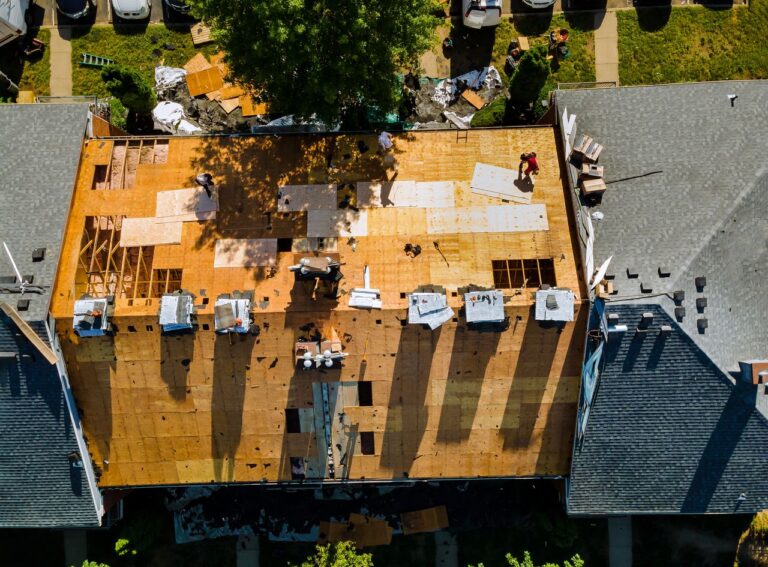
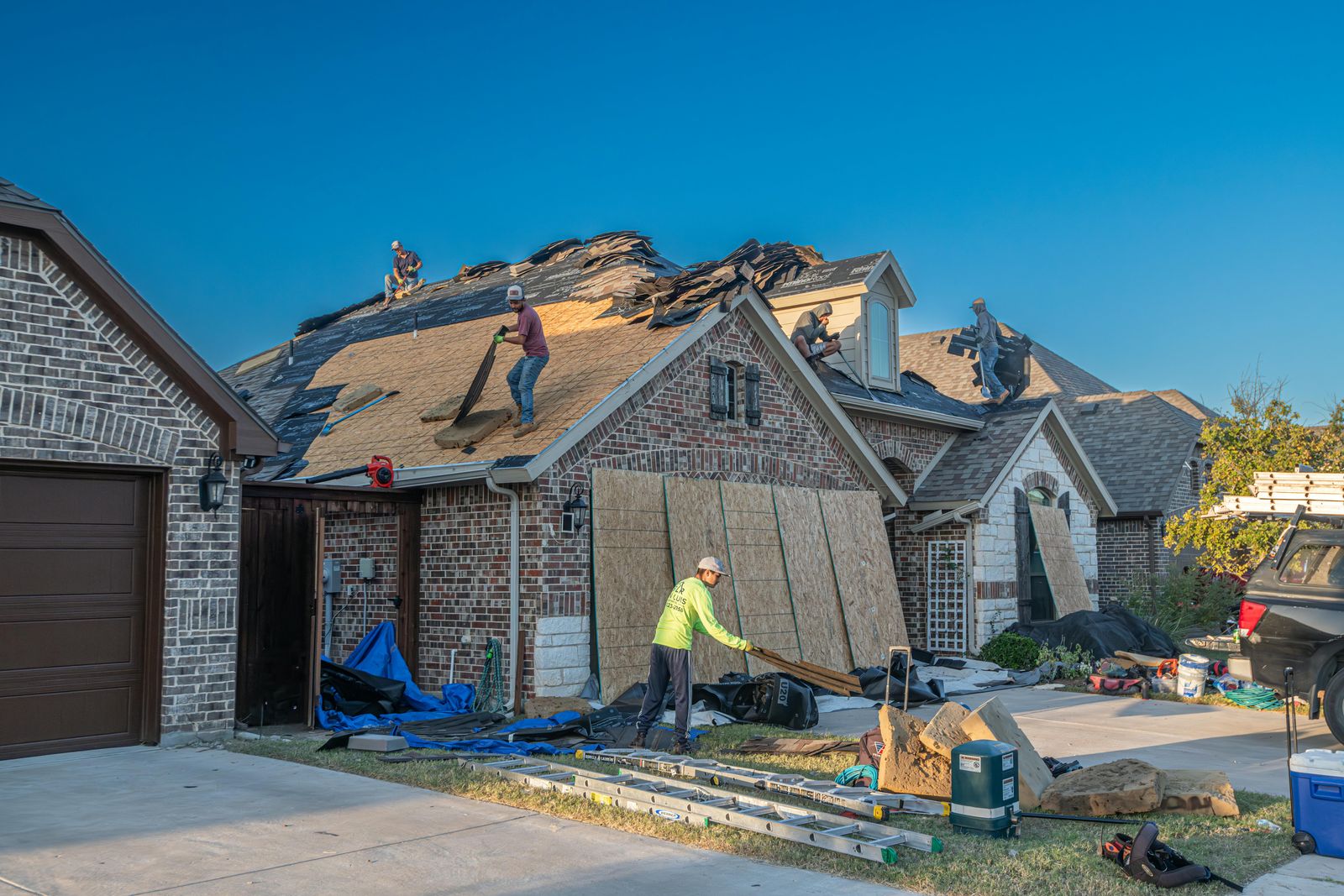
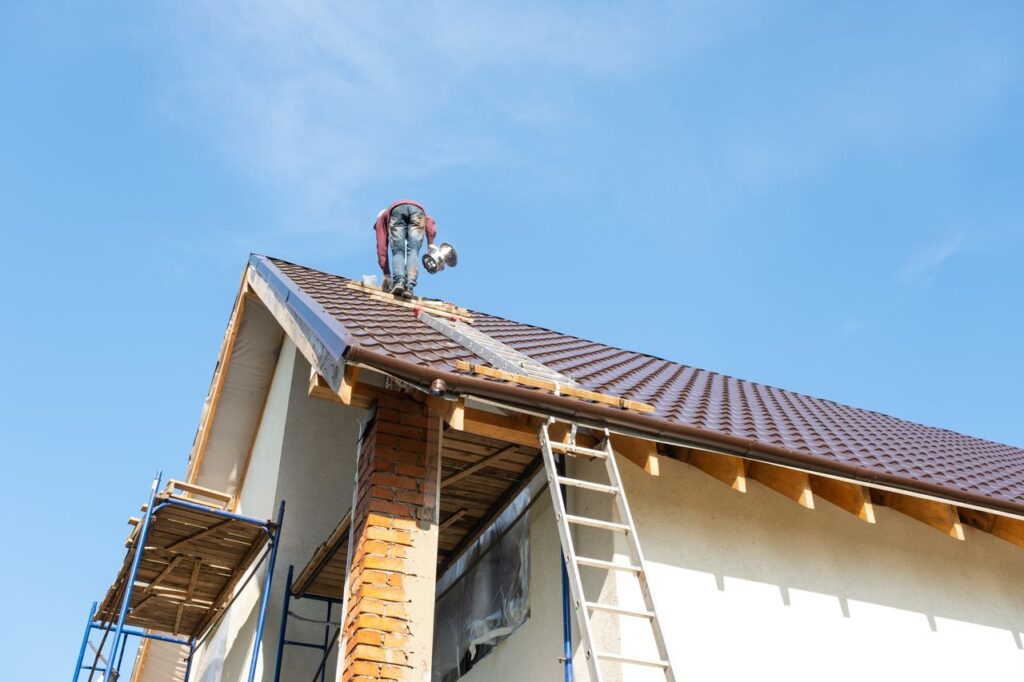
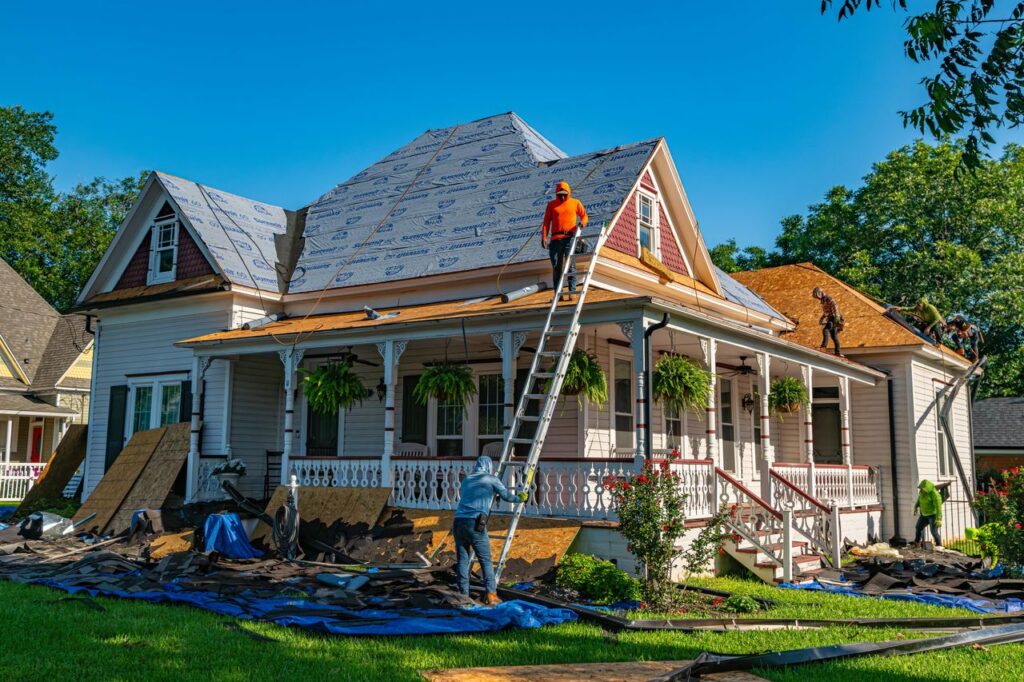
A complete replacement starts with protecting the property, not with pulling shingles. Crews set tarps over landscaping, cover pool equipment and AC condensers, and position a dump trailer where it will not damage your driveway. The tear off then removes every layer down to the bare wood decking, including old underlayment, nails, and flashing. Roofing over an existing layer is permitted in limited situations, but it hides deck problems and shortens the life of the new shingles. A full tear off lets the crew inspect every sheet of sheathing for rot, delamination, sagging, and improper spacing. Damaged sheets get replaced with new decking that matches the thickness of the original. That inspection alone justifies the tear off approach on almost every home.
Once the deck is sound, the dry in phase begins and it determines how well your roof handles wind driven rain. Drip edge goes on at the eaves under the underlayment and at the rakes over it, which is the sequence the building code specifies. Self adhering ice and water membrane belongs in the valleys and around penetrations like plumbing boots, chimneys, and skylights where water concentrates. Synthetic underlayment then covers the field, offering better tear resistance and walkability than traditional felt. Starter strip runs along the eaves and rakes with the sealant positioned to lock down the first course and the outer edges. Every one of those layers exists for a specific reason, and skipping any of them creates a weak point. A fall installation lets a crew complete this sequence carefully without racing the weather.
Shingle installation follows the manufacturer specification for exposure, offset, and fastening pattern. Most architectural shingles use four nails per shingle in standard applications and six nails for enhanced wind ratings, which many North Texas homes should have. Nails must land in the designated nailing zone, driven flush, and not overdriven or angled. Flashing at walls, chimneys, and roof to wall transitions gets replaced rather than reused, since old flashing is a frequent leak source. Ridge and hip caps go on last, along with the ventilation system that keeps your attic temperature and moisture in check. A final inspection includes a magnetic sweep of the yard, a walk of the roof, and a review of the completed work with the homeowner. Documentation and warranty registration close out the project.
Preparing Your Home for a Fall Roof Replacement in Texas
A little preparation on your end makes the installation smoother and reduces the chance of anything getting damaged. Move vehicles out of the driveway and away from the perimeter of the house, since debris and dropped material tend to land close to the walls. Take down mirrors, framed art, and anything fragile hanging on upper floor walls, because the vibration from a tear off travels through the structure. Cover items stored in the attic with plastic sheeting to catch the dust and old nail fragments that inevitably fall through the decking. Trim back branches that overhang the roof so crews have clear access and your new shingles are not scraped by limbs all winter. Let your neighbors know the date, especially in tight neighborhoods where a dump trailer takes up curb space. These steps take an afternoon and prevent most of the common complaints homeowners have after a project.
Fall is also the right moment to address gutters, since a replacement changes the roof edge and leaves fall throughout October and November. Drip edge and starter placement work together with the gutter to direct water off the roof and away from your fascia. Old gutters that are undersized, sagging, or pitched incorrectly will undermine a brand new roof by holding water at the eaves. Replacing or resetting them while the crew is already on site costs less than scheduling a separate mobilization later. Clean, correctly sloped gutters also prevent the overflow that saturates soil against your foundation during winter rain. In North Texas, foundation movement is a serious and expensive problem, and drainage is the first line of defense. Handling roof and gutter work together produces a system that actually functions as designed.
Attic ventilation deserves attention during the same project because it is far easier to correct with the roof open. A balanced system pairs intake at the soffits with exhaust at or near the ridge, generally sized around one square foot of net free area for every 150 square feet of attic floor, or 300 with a proper vapor barrier and balanced placement. Many older homes in Bedford, Euless, and Hurst have exhaust vents but blocked or insufficient intake, which starves the system and traps heat and moisture. That trapped moisture condenses on the underside of the decking in winter and shortens the life of both the sheathing and the shingles. Correcting intake usually means adding or clearing soffit vents, which is straightforward work during a replacement. Proper ventilation also protects your shingle warranty, since manufacturers require it. Getting it right in the fall means your attic performs correctly through both the cold months and the following summer. Need your gutters handled at the same time as your roof? Click here for our gutter services.
Why You Need a Fall Roof Replacement Scheduled Before the First Freeze
Waiting until winter to replace a failing roof puts your home at risk during the months it is least able to handle a problem. Cold fronts in North Texas arrive fast and can drop temperatures forty degrees in a matter of hours, and freezing rain has caused major damage across the region multiple times in recent years. A roof with lifted shingles, failed flashing, or exposed decking will not survive that pressure well. Getting the work done in October or November means your home enters winter with a fully sealed, properly fastened, warranty backed roofing system. It also means you are not competing for a spot on a contractor’s schedule after a freeze creates emergency demand across the entire metroplex. The decision is simple once the timeline is clear.
Why a Fall Roof Replacement Protects Your Home Through Winter Storms
Winter weather in North Texas is unpredictable in a way that punishes deferred maintenance. Ice storms in 2021 and 2023 caused widespread damage across Tarrant and Denton counties, and homes with aging roofs took the worst of it. Ice accumulation adds significant weight and works its way under any shingle that is not properly sealed. Freezing and thawing cycles then expand that gap a little more with every swing in temperature. A roof installed in fall has fully bonded sealant strips by the time the first freeze arrives, which is exactly the protection those conditions demand.
Wind is the other winter threat, and it interacts directly with how well your shingles are sealed. Strong north winds behind a cold front routinely gust past 40 miles per hour across the Dallas and Fort Worth area. Unsealed or poorly fastened shingles lift at the edges, and once one lifts, the wind gets under the course above it. That is how a small problem becomes a section of missing roof in a single evening. Shingles installed and sealed during fall conditions resist that lifting because the adhesive has had warm days and sunlight to cure properly.
Leaks that develop in winter are also more damaging and harder to address than leaks in other seasons. Water entering a cold attic condenses on framing and insulation, soaking materials that dry very slowly in low temperatures. Wet insulation loses most of its R value, which raises your heating costs while the problem goes unnoticed. Emergency repairs in freezing weather are limited, since shingles cannot be sealed properly and tarping is often the only immediate option. A replacement completed in fall eliminates the entire scenario before it can start.
Why a Fall Roof Replacement Saves Money on Energy and Repairs
A new roofing system does more than keep water out; it changes how your attic behaves year round. Correcting ventilation during a replacement lets hot, moist air escape and draws cooler air in through the soffits. That moves your attic closer to outside temperature instead of letting it become a heat and moisture trap. Homeowners commonly notice more stable indoor temperatures and less strain on their HVAC system after ventilation is corrected. Those savings continue every month for the life of the roof.
Repair costs are the other side of the equation, and they climb quickly once a roof starts failing. Patching the same problem area two or three times a year adds up to real money without solving anything. Interior damage from a persistent leak brings drywall, paint, insulation, and sometimes flooring into the picture. Mold remediation is a possibility if moisture sits in a wall cavity long enough. Replacing the roof on your schedule in the fall costs less than replacing it plus the interior repairs after an emergency.
Financing and insurance timing also favor the fall for many households. Homeowners who already met their deductible on an earlier claim that year benefit from completing work before the policy period resets. Flexible financing options spread the investment across manageable payments rather than requiring a single large outlay. Property value is another consideration, since a documented new roof with transferable warranty coverage is one of the strongest selling points a North Texas home can carry. Planning ahead gives you room to weigh all of it without pressure.
Why Choose TM Roofing and Construction Group for Your Fall Roof Replacement
TM Roofing and Construction Group is locally owned and operated out of Bedford, and we treat every home in this area the way we treat our own. More than 600 Facebook reviews and BBB accreditation reflect a track record built one roof at a time across Tarrant and Denton counties. Our team knows what North Texas weather does to roofing systems because we repair the results of it every week. That experience shapes how we specify materials, fastening patterns, and ventilation on every project we install. Homeowners in Colleyville, Southlake, Grapevine, Keller, Flower Mound, and the surrounding communities count on us for work that holds up.
Our installations are backed by lifetime manufacturer warranties and a 10 year workmanship guarantee, which covers both the product and the quality of the labor behind it. We are insurance claim specialists, so we handle documentation, adjuster meetings, and supplements as part of the process rather than leaving you to sort it out alone. We also put $500 toward your deductible on qualifying claims. Free estimates are available and our team is reachable 24/7 when something goes wrong. Flexible financing is available for homeowners who prefer to spread the cost out.
Fall gives you the best conditions of the year for a roof replacement, and that window closes faster than most people expect. An inspection now tells you exactly what your roof needs and what condition the decking, flashing, and ventilation are in before winter tests all three. Our team will walk you through the findings with photographs and give you a clear, itemized estimate with no pressure attached. Call TM Roofing and Construction Group at (817) 820-9596 to schedule your free inspection while the scheduling window is still open. Serving Bedford and the surrounding cities, click here to learn more about our roofing services and get started today.