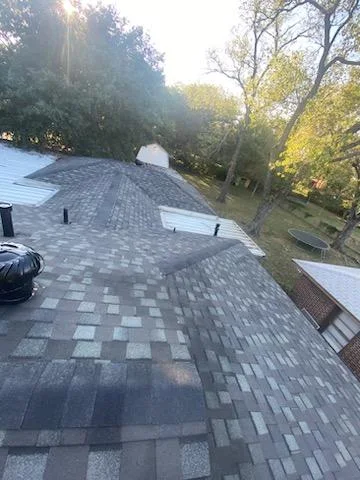
How Often Should Gutters Be Cleaned in North Texas
Most homeowners in North Texas think about gutters twice: once when water pours over the front edge during a thunderstorm, and once when a contractor points at rotted fascia board and quotes a repair. Gutters are a quiet system. They move thousands of gallons of water away from your roof edge and your foundation every year without asking for attention, right up until they stop working. The honest answer to how often gutters should be cleaned in North Texas is at least twice a year for a typical home, and three to four times a year for homes surrounded by mature oaks, pecans, and cedar elms. That range is not a sales pitch; it comes from how our trees drop, how our storms behave, and how our clay soil reacts to water sitting in the wrong place. Late summer is the right moment to plan the fall service, because the first hard leaf drop usually arrives in November and December and the winter rain follows close behind. A gutter full of packed leaves in January does not drain, it holds weight and moisture against your roof edge for weeks. Homeowners who set a schedule spend far less over a decade than homeowners who wait for a visible failure. The rest of this breakdown covers the schedule, the damage that follows a missed schedule, and what a professional cleaning and inspection should include.
How Often Gutters Should Be Cleaned in North Texas Each Season
The cleaning schedule that works in Ohio does not work here, and the schedule that works in West Texas does not work here either. North Texas sits in a strange middle zone with two separate leaf drops, a violent spring hail season, and long dry stretches that bake debris into a solid mat inside the trough. A gutter in Bedford or Colleyville collects a very different mix of material than a gutter in a treeless new build subdivision three miles away. Roof pitch matters, tree canopy matters, and the type of gutter guard installed on the home matters. The baseline schedule below covers most properties, and the adjustments after it cover the homes that need more attention. Setting the calendar is the part most people skip. Two scheduled visits per year beat four emergency calls after the fact, every time.
The Twice a Year Baseline for Gutter Cleaning in North Texas
For a home with light to moderate tree coverage, gutters should be cleaned twice a year in North Texas: once in late fall after the majority of leaf drop finishes, and once in late spring after the live oaks shed. That second cleaning surprises a lot of homeowners who moved here from other parts of the country. Live oaks hold their leaves through winter and drop them in March and April, right as they release heavy catkins and pollen. The result is a gutter that was perfectly clean in December and completely packed by May. A late fall cleaning in November or early December clears the pecan, cedar elm, and post oak debris before winter rain arrives. A late spring cleaning in April or May clears the live oak load before summer storms test the system. Those two visits handle the vast majority of debris that a normal North Texas roof will shed onto its own edge.
Timing within each window makes a real difference in how well the cleaning holds. Cleaning in early October feels productive, but the trees are not done, and the gutters refill by Thanksgiving. Waiting until the branches are bare gives you a cleaning that actually lasts through the wet months. The same logic applies in spring: a March cleaning gets undone by the April live oak drop. Push the spring service to late April or May and the gutters stay open through the hottest months. Homeowners who follow this pattern usually find their gutters still flowing freely at the end of summer. That is the goal, because a clear gutter in August handles a sudden four inch downpour without overshooting the front edge and dumping water at the base of the wall.
There is also a practical reason to keep the schedule tight rather than stretching it to once a year. Debris does not sit loose in a gutter for twelve months. It absorbs water, breaks down, mixes with roof granules, and compacts into a dense organic sludge that holds moisture permanently against the metal. That sludge accelerates corrosion on steel gutters, encourages seam leaks on sectional systems, and adds significant weight to hangers that were designed for water alone. A fifty foot run of gutter packed with wet debris can carry hundreds of extra pounds. Hangers spaced every twenty four to thirty six inches will pull loose under that load, and once one hanger fails the pitch changes and the problem spreads. Cleaning twice a year keeps the material loose and easy to remove instead of letting it turn into a cemented layer that requires scraping.

How Often Gutters Should Be Cleaned in North Texas Under Heavy Tree Cover
Homes in older established neighborhoods need more than the baseline. Areas across Hurst, Euless, Bedford, Colleyville, and parts of Arlington have canopy that was planted forty or fifty years ago and now extends directly over the roof line. Those properties usually need gutter cleaning three to four times a year in North Texas, not two. The rule of thumb is simple: if branches hang over any section of roof, that section is feeding your gutters continuously rather than seasonally. Pecans are especially rough because they drop small leaflets, husks, and twigs across a long window. Cedar elms drop tiny leaves that slip through most guard systems and settle into a fine mat. Add a few squirrels moving acorns around and the trough fills faster than any two visit schedule can handle.
Gutter guards change the frequency but do not eliminate the need for service, and this is where a lot of marketing gets misleading. A quality micro mesh guard keeps out the large material and dramatically reduces how often the trough itself needs clearing. It does not stop fine debris from building on top of the mesh, and it does not stop shingle granules or pollen from working through. Guarded gutters under heavy canopy still need an annual inspection and surface cleaning, because a mesh covered in a solid layer of decomposed leaves sheds water right over the top of the gutter instead of into it. That failure is worse than an open clogged gutter because it is invisible from the ground. Homeowners assume the system is working while water sheets past the edge onto the soil below. Guards are a good investment; they are a reduction in labor, not a replacement for eyes on the system.
Roof design plays into frequency as well. Homes with valleys that dump into a single short gutter run concentrate debris in one spot, and that spot will clog long before the rest of the system does. Complex roofs with multiple dormers, several valleys, and long slopes push a disproportionate volume of both water and material toward specific corners. On those homes, a partial cleaning focused on the problem areas partway through the season is often smarter than a full service. Downspout placement matters too, since one downspout should serve roughly thirty to forty feet of gutter run. A home with too few downspouts for its roof area will back up faster and hold standing water longer, which means more frequent service until the drainage capacity is corrected. Need your gutters cleaned, repaired, or replaced with a system sized correctly for your roof? Click here for our gutter services.
How Storm Season Changes How Often Gutters Should Be Cleaned in North Texas
Storm season rewrites the schedule. North Texas sits in one of the most active hail corridors in the country, with the heaviest activity running from March through June. Hail does two things to a gutter system at once. It strips granules from asphalt shingles, and those granules wash straight into the trough where they settle into a heavy gritty layer at the bottom. It also dents and deforms the gutter itself, which changes the pitch and creates low spots that hold standing water. A gutter that drained perfectly in February can hold two inches of water in a dented section by July. That standing water becomes a mosquito nursery and a corrosion point.
After any significant hail or high wind event, gutters should be checked regardless of when they were last cleaned. Wind drives leaves, small branches, and roof debris into the system in a matter of minutes. A single storm can undo a cleaning performed the week before. More importantly, the debris that lands in the gutter after a storm is often evidence of what happened above it. A heavy layer of granules points to shingle damage that may qualify for an insurance claim. Loose nails, pieces of shingle, or fragments of pipe boot in the trough indicate roof problems that need attention before the next rain. A post storm gutter check is one of the cheapest early warning systems a homeowner has.
Fall and winter storms deserve attention too, even though they get less coverage than spring hail. North Texas winter rain tends to be slow and steady rather than violent, which is exactly the pattern that exposes a clogged gutter. A short intense summer downpour overwhelms every gutter for a few minutes and then ends. A twelve hour winter rain gives a clogged gutter twelve hours to overflow at the same spot, saturating the same section of soil and the same run of fascia. That is how rot starts. Occasional hard freezes add another layer of risk, because water trapped in a packed gutter expands when it freezes and can separate seams or pull hangers away from the fascia board. Clearing gutters before the first freeze is one of the highest value maintenance tasks on a North Texas home.
What Happens When Gutters Are Not Cleaned Often Enough in North Texas
The consequences of skipped gutter cleaning are rarely dramatic at first. Nothing collapses; nothing floods. The damage accumulates slowly at the roof edge, along the walls, and under the soil, and by the time it becomes visible it has usually spread beyond the gutter itself. This is what makes gutter neglect expensive. A cleaning costs a fraction of what fascia replacement costs, and fascia replacement costs a fraction of what foundation work costs. Understanding the failure chain helps homeowners see why the schedule matters. Each of the sections below traces a different path that water takes when it cannot get where it is supposed to go.
Fascia and Soffit Damage From Gutters Not Cleaned Often Enough
Fascia board is the flat vertical board running along the roof edge, and it is the surface your gutters hang from. On most North Texas homes it is wood, and wood behaves predictably when it stays wet. A clogged gutter holds standing water directly against the back wall of the trough, which sits directly against the fascia. Over months, moisture wicks into the board, paint blisters and peels, and the wood softens. Soft fascia will not hold a hanger screw. Once hangers begin pulling free, the gutter sags, the pitch reverses, and even more water collects in the failing section. The problem compounds itself, and a homeowner who ignores a sagging corner for two seasons is usually looking at carpentry work rather than a gutter repair.
Soffit damage follows shortly after. The soffit is the horizontal underside panel between the fascia and the exterior wall, and it usually contains the vents that feed air into your attic. When water overflows a clogged gutter, some of it runs down the exterior and some of it gets pulled backward into the soffit cavity by wind and surface tension. That water stains the panels, deteriorates the vent screens, and creates a damp pocket in a space that is supposed to stay dry. Damp soffit cavities attract wasps, wood boring insects, and rodents looking for an entry point. Once an animal finds a soft spot in a deteriorated soffit panel, you have an attic problem on top of a water problem. Repairing that damage means removing panels, replacing framing where needed, and restoring ventilation, which is significantly more involved than clearing the gutter would have been.
Attic moisture is the outcome most homeowners never connect to their gutters. Roof edge water intrusion travels along the deck sheathing and shows up as dark staining on the underside of the plywood near the eaves. In a humid attic, that moisture reduces insulation performance, promotes mold growth on the sheathing, and shortens the life of the decking itself. Ventilation problems in the soffit make it worse by trapping the moist air instead of exhausting it. During a roof replacement, rotted decking at the eaves is a common change order, and the root cause is almost always years of gutter overflow. Homeowners are often surprised to learn that a two hundred dollar maintenance habit would have prevented a multi thousand dollar decking replacement. If your roof edge is showing stains, sagging, or peeling paint, the gutters are usually the first place to look.

Foundation and Landscape Damage From Gutters Not Cleaned Often Enough in North Texas
North Texas sits on expansive clay soil, and that single geological fact makes gutter performance more important here than in most of the country. Clay swells when it absorbs water and shrinks when it dries. Slab foundations sitting on that soil move with it. The goal of any drainage plan on a North Texas home is consistency: keep the soil moisture around the perimeter as even as possible year round. A clogged gutter destroys that consistency by dumping concentrated volumes of water at specific points along the wall while leaving other sections dry. That uneven moisture creates differential movement, and differential movement is what cracks drywall, sticks doors, and separates brick.
The volume involved is larger than most people picture. A one inch rainfall on a two thousand square foot roof produces roughly twelve hundred gallons of water. Functioning gutters and downspouts carry that volume away from the house and release it at a controlled distance. A clogged system releases it straight down along the foundation line, saturating a narrow band of clay soil repeatedly through the wet season. After a few years of that pattern, homeowners start noticing hairline cracks above door frames and gaps at the corners of the ceiling. Foundation repair in this region regularly runs into five figures. Drainage correction is almost always part of the repair recommendation, which means the gutters get fixed either way; the only question is how much damage happens first.
Landscaping absorbs a lot of the abuse before the foundation does. Overflowing gutters erode mulch beds, wash soil away from the base of shrubs, and carve channels through flower beds that took years to establish. Water splashing off hard surfaces throws soil onto siding and brick, leaving stains that are difficult to remove. Beds that stay saturated develop root rot in plants that were never meant to sit in standing water. On homes with irrigation systems, the combination of sprinkler water and gutter overflow keeps the perimeter soil permanently soggy in the areas closest to the house. Correcting the gutters and extending the downspouts is a small project that protects both the landscaping and the structure behind it. Concerned that storm damage has affected your roof and gutters at the same time? Click here for our roofing services.
Roof and Shingle Damage From Gutters Not Cleaned Often Enough
A clogged gutter does not just overflow at the front lip. When the trough fills completely, water backs up under the drip edge and onto the lower edge of the shingles. That lower course was designed to shed water downhill and into the gutter, not to sit submerged. Standing water at the shingle edge works its way under the tabs and reaches the underlayment and the decking beneath. Over time the adhesive strip on the bottom course weakens and the shingles begin to curl or lift. Once lifted, they catch wind, and North Texas provides plenty of wind. What started as a maintenance issue at the gutter becomes a roofing repair at the eave.
Debris in the gutter also functions as a wick that stays wet long after the rain ends. A packed layer of decomposed leaves and shingle granules holds water for days in humid conditions. That prolonged contact with the roof edge accelerates deterioration of the drip edge flashing, especially on older homes where the drip edge may be thin gauge or improperly lapped. Rusted or displaced drip edge lets water travel behind the gutter instead of into it, which reroutes the entire problem into the fascia and the wall assembly. Proper installation places the drip edge so it extends over the back of the gutter and directs flow into the trough. A gutter cleaning that includes a look at the drip edge catches this before it turns into water inside the wall.
Ice is rare in North Texas but not absent, and it is worth understanding the mechanism. When a hard freeze follows a wet period, water trapped in a clogged gutter freezes into a solid mass. That mass blocks any subsequent drainage and forces melting water to back up onto the roof surface. The weight alone can tear hangers loose or bend the gutter outward, permanently changing its pitch. Homes with poor attic insulation see worse ice buildup at the eaves because heat escaping through the roof melts snow that then refreezes at the cold edge. Clearing gutters before winter removes the material that makes this possible. It is a low effort task with a high consequence if skipped.
Why You Need a Professional Gutter Cleaning and Inspection Schedule in North Texas
Plenty of homeowners can clear a gutter with a ladder and a bucket, and there is nothing wrong with that on a single story home. The value of a professional service is not just the labor; it is the inspection that happens alongside it. Someone standing at your roof edge twice a year sees the loose flashing, the lifted shingle, the failing pipe boot, and the separated gutter seam long before any of those become visible from the driveway. That early detection is what keeps small repairs small. It also creates a documented history of your roof and gutter condition, which matters enormously when a hail claim gets filed. A scheduled service turns maintenance from a reaction into a plan.
Why a Professional Gutter Cleaning Schedule Protects Your North Texas Home
A professional cleaning covers more than scooping debris out of the trough. Downspouts need to be flushed and checked for internal blockages, since a clear gutter feeding a clogged downspout still backs up. Hangers get checked for tension and spacing, seams get inspected for separation, and the pitch gets verified so water actually reaches the outlets. Proper pitch is roughly a quarter inch of fall for every ten feet of run, and even a small deviation creates standing water. These are checks that take a trained eye and a few minutes, and they prevent the majority of gutter failures we see.
Ladder work at the roof edge is also the single most common source of homeowner injury during exterior maintenance. Two story homes, steep grades, and unstable ground near flower beds make setup risky. Adding a bucket of wet debris and a leaning reach turns a routine task into a real hazard. Professional crews carry stabilizers, work in pairs, and are insured for the work they perform. That alone justifies the cost for many homeowners, especially on multi story properties.
Consistency is the other benefit that is easy to overlook. A scheduled service happens at the right time in the season without anyone having to remember it. That means the fall cleaning actually occurs after leaf drop and before the first freeze, and the spring cleaning happens after the live oaks finish. Homeowners who handle it themselves tend to do it when they notice a problem, which is by definition too late. Setting the schedule once and letting it run is the simplest way to protect the roof edge, the walls, and the foundation.
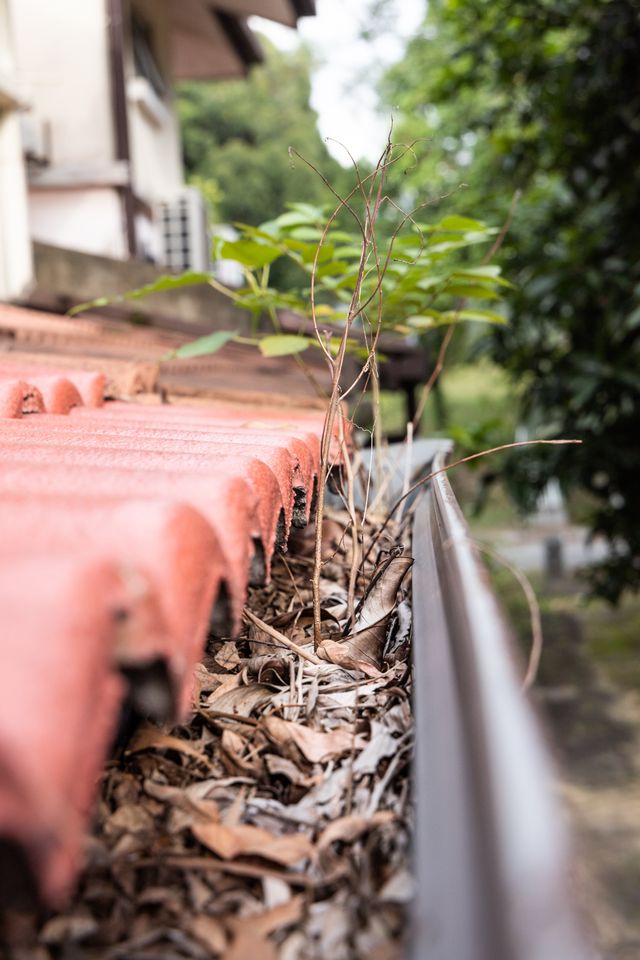
Why Gutter Cleaning and Roof Inspection Belong on the Same Schedule
Gutters and roofs fail together, and inspecting them together saves money. The debris in your gutter is a direct sample of what your roof is losing. A heavy layer of granules means the shingle surface is wearing or was damaged by hail, and that finding changes the conversation entirely. Catching granule loss early gives a homeowner time to file an insurance claim within the policy window rather than discovering the damage years later when the claim is denied for age. The gutter is essentially a collection tray for evidence about your roof.
Pairing the two services also means one trip, one crew, and one appointment instead of two. While the crew is at the roof edge, the pipe boots, valley metal, ridge line, and flashing details can all be evaluated. Pipe boots are the most common leak source on North Texas homes because the rubber collar cracks under our summer UV exposure, usually somewhere between eight and twelve years in. That is a small repair when caught during a routine visit and a ceiling repair when caught after a rain.
The documentation matters too. A record showing your roof was inspected and maintained on a schedule strengthens any future insurance conversation and helps at resale. Buyers and inspectors both respond well to a maintenance history. It also gives you an accurate picture of how much life your current roof has left, which makes replacement planning a decision rather than an emergency. Want to protect the walls below your gutter line at the same time? Click here for our siding services.
Why Choose TM Roofing & Construction Group for Gutter Cleaning in North Texas
TM Roofing & Construction Group is locally owned and operated out of Bedford, and we treat every home the way we treat our own. That is not a slogan we hang on the wall; it is the reason we are backed by more than 600 Facebook reviews and accreditation with the Better Business Bureau. We work across Bedford, Hurst, Euless, Colleyville, Grapevine, Southlake, Keller, Arlington, Irving, Lewisville, Flower Mound, and the surrounding communities. Our crews know how North Texas trees drop, how our storms hit, and what our clay soil does with water that lands in the wrong place. That local knowledge shows up in the recommendations we make.
We back our work with lifetime manufacturer warranties and a ten year workmanship guarantee, and we are insurance claim specialists who will put $500 toward your deductible. Storm damage claims are confusing, and most homeowners only file one or two in their lifetime. We handle the documentation, meet the adjuster, and make sure the scope reflects what actually happened to your home. Free estimates are standard, financing is flexible, and we are available 24/7 when something goes wrong at an inconvenient hour. You will never get a pressure pitch from us.
If your gutters are overflowing, sagging, or simply overdue, the fall window is opening now and it is the right time to get on the schedule. We will clear the system, flush the downspouts, check the pitch and hangers, and give you an honest assessment of the roof edge while we are up there. No exaggerated findings, no invented repairs, just a clear report and a straight quote. Call TM Roofing & Construction Group at (817) 820-9596 or stop by our office at 1301 Schumac Ln, Bedford, TX 76022 to set up your free estimate. One appointment now is far cheaper than the repairs that follow a winter of overflow.