How Cold Weather Affects Shingle Sealant and Roof Repairs
Asphalt shingles are engineered to glue themselves down, and that bond is what keeps a roof intact when the wind starts pushing. Every three tab and architectural shingle carries a strip of thermally activated asphalt adhesive along its face, and that strip only softens and grips once the roof surface warms enough to melt it slightly. When temperatures drop, that chemistry slows to a crawl and sometimes stops entirely, which leaves shingles sitting loose on the deck even though they look perfectly installed from the ground. North Texas homeowners run into this more often than people expect, because a Bedford winter rarely stays cold for long; it swings from a 70 degree afternoon to a 28 degree morning within a single day, and the roof feels every bit of that swing. Repairs made during those cold stretches follow different rules than repairs made in July, and a crew that ignores those rules can leave a homeowner with shingles that never bond at all. Understanding what happens to shingle sealant in cold weather makes it far easier to judge when a repair should happen now and when it should wait. It also explains why some roofs lose shingles during the first strong front of the season even though the material is only a year or two old.
How Cold Weather Affects Shingle Sealant on an Asphalt Roof
Shingle sealant is not glue in the household sense, and it does not cure the way caulk or epoxy does. It is a strip of modified asphalt adhesive that stays inert until solar heat and ambient warmth soften it, at which point the weight of the shingle above presses the two surfaces together and forms a permanent bond. Most manufacturers expect that process to happen naturally within a few days of installation during warm weather, and within a few weeks during mild weather. Once the temperature falls into the 40s and lower, the adhesive stiffens into something closer to a hard wax, and the bond either forms very slowly or waits until spring. That delay creates a window where the roof is technically finished but not yet sealed, and wind is the main threat during that window. Knowing how the sealant behaves in cold conditions tells you what your roof can and cannot handle during a North Texas winter.
Why Shingle Sealant Needs Heat to Bond During Cold Weather
The adhesive strip on an asphalt shingle is designed around a fairly narrow activation range, and heat is the trigger that starts everything. Most manufacturers specify that surface temperatures need to reach roughly 50 to 70 degrees with direct sun exposure for the sealant to soften and grab the shingle above it. On a sunny winter day in Bedford, a south facing slope can easily hit that range even when the air temperature reads 45 degrees, because dark asphalt absorbs a surprising amount of solar energy. A north facing slope on the same house may never get there, and it can sit unsealed for months while the south side bonds within a week. Shade from mature oaks, chimneys, and second story walls creates the same problem on a smaller scale. This is why two sections of the same roof, installed by the same crew on the same day, can behave completely differently through the winter. The sealant is not defective in those shaded areas; it simply has not received the energy it needs.
Time under warmth matters just as much as peak temperature, which is something many homeowners miss. A roof that touches 55 degrees for forty minutes around noon has not received the same treatment as a roof that holds 55 degrees for six hours. The asphalt in the sealant strip needs sustained softening to flow into the texture of the shingle surface below it and create real surface contact. Brief warm spikes produce partial bonds that look fine from a ladder but pull apart under uplift pressure. That partial bond is the most misleading condition on a winter roof, because a light hand test suggests everything is fine. Wind does not test a roof gently, and it finds those weak spots quickly. A full bond requires repeated warm days, not one pleasant afternoon in January.
Roof pitch and shingle color also change the math in ways worth understanding. Steeper slopes on the south and west sides catch low winter sun at a better angle and warm faster than a shallow slope on the same house. Darker shingles absorb more radiant heat than lighter weathered wood or driftwood colors, and that difference can amount to ten or fifteen degrees of surface temperature on a clear day. Older roofs with granule loss also lose some of their heat retention behavior, since the exposed asphalt weathers and hardens over time. None of this makes a cold weather installation wrong, and none of it means a homeowner should panic about a winter roof. It simply means the sealing timeline stretches out, and the crew installing the roof needs to compensate for that stretch on purpose rather than hoping the weather cooperates. If you want a professional evaluation of how your slopes are handling seasonal temperature swings, click here for our roofing services and we will take a look.

What Happens to Shingle Sealant During a North Texas Cold Snap
A Bedford cold front does not arrive gently, and the speed of the temperature drop matters as much as the low number itself. A blue norther can pull the temperature down thirty degrees in a few hours, and it brings sustained wind along with it. That combination is the worst case for a roof with unsealed shingles, because the cold stiffens the adhesive at the same moment the wind starts pulling at the tabs. Shingles that were slowly working toward a bond can lift, break the partial contact they had built, and then refuse to reseal because the surface is now covered in dust or debris. Contamination is the hidden problem in that sequence. Once dirt gets between the adhesive strip and the shingle above, the bond will not form correctly even when spring arrives. That is how a single windy December night creates a repair that shows up as a leak in May.
Repeated freeze and thaw cycles put their own kind of stress on sealant that has already bonded. Asphalt expands and contracts with temperature, and a North Texas winter delivers dozens of those cycles instead of one long steady freeze. Every cycle works the bond a small amount, and older sealant that has already lost some flexibility gives up faster than fresh material. Roofs in the fifteen to twenty year range are the ones that typically start shedding shingles during winter, because the adhesive has hardened and lost its ability to stretch. The shingles themselves also get brittle in that age range, so a broken bond often turns into a cracked tab. Ice storms compound the problem by adding weight and by forcing water into any gap that has opened up. Gutters that back up with ice make it worse by holding water against the eave edge where the seal matters most.
Wind driven rain during a cold snap is the specific event that turns an unsealed roof into an interior problem. Sealed shingles form a continuous barrier that keeps water moving downhill even when wind pushes against the slope. Unsealed shingles allow that wind to lift the tab and drive water sideways underneath, where it reaches the nail line and eventually the underlayment seams. Synthetic underlayment buys time, and a properly installed self adhered membrane at the eaves buys more, but neither is meant to serve as the primary water barrier. The damage usually shows up on ceilings near exterior walls or around penetrations like plumbing vents and chimneys. Homeowners often assume the leak came from a storm the week before, when the real cause was a bond that never formed two months earlier. That is the difference a cold weather installation detail can make.
Signs Your Shingle Sealant Failed After a Cold Weather Season
The clearest sign of a sealant problem is a shingle tab that flutters or lifts in moderate wind while the shingles around it stay flat. From the driveway that movement looks minor, but a shingle that moves is a shingle that is not bonded, and it will keep working itself loose with every gust. Another common sign is a row of shingles that appears slightly raised or wavy compared to the courses above and below it. That waviness usually means the tabs are resting on the adhesive strip instead of being pulled down tight against it. Granules collecting in gutters and at downspout outlets can also point to shingles rubbing against each other because they never locked into place. Any of these signs deserve a closer look before the next windy stretch. Catching them early is far cheaper than replacing a section of roof after a blow off.
Interior evidence tends to appear later and can be easy to misread. Small brown rings on a ceiling, faint staining along the top plate of an exterior wall, or a musty smell in the attic after a cold rain all suggest water is getting past the shingle layer somewhere. In an attic inspection, dark streaking on the underside of the decking or rusty nail shanks point to repeated moisture exposure rather than one isolated event. Insulation that has flattened or darkened in one spot is another quiet indicator. These signs rarely line up directly under the failure point, because water travels along rafters and decking before it drops. Tracing the path takes experience, and guessing usually leads to repairs in the wrong place.
Some sealant failures show up only under testing, which is why a physical inspection beats a visual one from the ground. A roofer can lift a tab by hand at several points across each slope and feel how much resistance the adhesive gives. Fully bonded shingles resist strongly and often tear the mat before they release, while unsealed shingles come up with almost no effort. That test, repeated across north and south facing slopes, gives a clear picture of how the roof handled the season. It also identifies areas that need hand sealing before the next round of wind arrives. Drone photography and attic checks fill in the rest of the picture, especially around valleys, penetrations, and flashing details where cold weather issues concentrate.
How Cold Weather Changes Roof Repairs and Shingle Installation
Repair work in cold weather is entirely possible, and roofing crews in North Texas do it every winter without issue. The difference lies in technique, because cold changes how the material behaves under a hammer, a nail gun, and a boot. Asphalt shingles lose flexibility as temperatures fall, and by the time the roof surface sits in the 30s and 40s the mat becomes stiff enough to crack when bent around a hip or a valley. Sealant will not activate on its own, so the crew has to create the bond manually. Self adhered membranes lose tack, fasteners behave differently, and even the way bundles are stored the night before affects the result. A crew that adjusts for all of this produces a repair that performs exactly like a summer repair. A crew that does not is simply installing material and hoping.
Hand Sealing Shingles During Cold Weather Roof Repairs
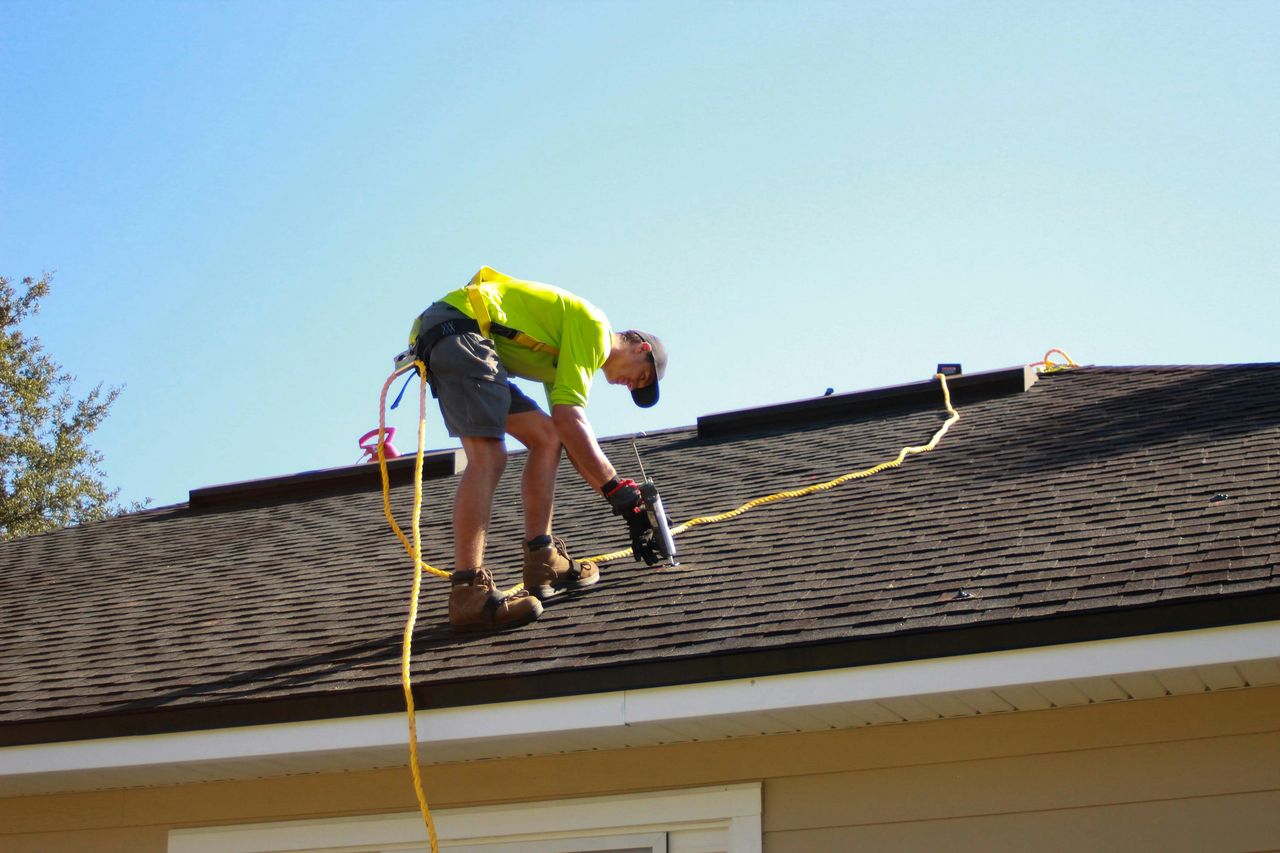
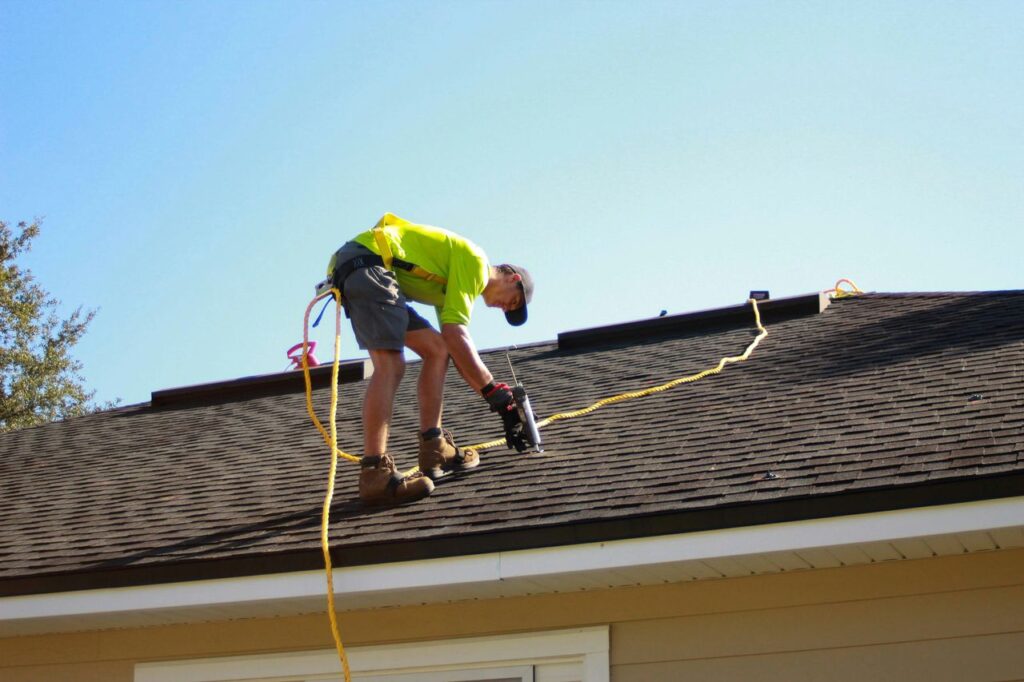
Hand sealing is the standard answer to cold weather installation, and most shingle manufacturers require it below roughly 40 degrees to keep the wind warranty intact. The process uses asphalt roof cement meeting ASTM D4586, applied in small dabs about the size of a quarter under each shingle tab in the pattern the manufacturer specifies. Those dabs replace the factory adhesive strip until natural sealing takes over during the first warm stretch. Placement matters more than volume, and this is where careless work causes problems. Dabs applied too close to the leading edge squeeze out and stain the shingle face, which is permanent and visible from the street. Dabs applied too far up the shingle leave the vulnerable bottom edge free to lift in wind. Correct placement puts the cement where the factory strip would have gripped, roughly one inch above the bottom edge on most architectural products.
Using too much roof cement causes its own set of failures, which surprises homeowners who assume more adhesive means more security. Thick applications stay soft underneath and never fully cure, and they create raised bumps that telegraph through the shingle above as the roof heats up in spring. Excess cement also traps moisture between layers and can accelerate blistering in the shingle mat. On top of that, heavy cement makes future repairs much harder, because the shingles bond so aggressively that removing one damages the three around it. The right approach is disciplined and consistent: correct dab size, correct spacing, correct position, applied to every tab in the repair area. Skipping tabs to save time defeats the entire purpose. Every shingle in a cold weather repair needs the same treatment.
Temperature affects the cement itself, and that detail gets overlooked on job sites. Roof cement thickens considerably in the cold and becomes difficult to gun out of a tube evenly, which tempts crews to rush or to apply uneven blobs. Keeping cartridges in a heated truck cab or a warming box until the moment of use keeps the material workable and the application consistent. Some products are formulated specifically for low temperature application and flow better in the 30s than standard formulations. Reading the manufacturer instructions for both the shingle and the cement matters here, since mixing incompatible products can void coverage. Self adhered ice and water membranes deserve the same attention, because most require surface temperatures above 40 degrees to bond properly and may need a primer or mechanical fastening when applied colder. Getting these details right is the difference between a repair that lasts twenty years and one that fails next fall. If your commercial property needs winter work handled with the same level of care, click here for our commercial roofing services.
Nailing and Handling Shingles During Cold Weather Roof Repairs
Cold asphalt shingles crack, and the damage often happens before a single nail goes in. Bundles stored outside overnight in freezing weather become stiff enough that bending a shingle over a ridge or folding it into a valley snaps the mat. Experienced crews store bundles in a heated garage or truck the night before and carry only what they can install in the next thirty minutes onto the roof. Shingles should be laid flat rather than stacked on edge or draped over a ridge, since bending a cold bundle creates hairline fractures that show up as leaks years later. Cutting also changes in the cold, and a dull blade tears rather than slices through a stiff mat. Fresh blades and a warm shingle produce clean cuts that seat properly against valleys and walls. These habits cost a few extra minutes and prevent a long list of problems.
Fastening requires active attention when the material is cold and stiff. Pneumatic nail guns driving into hardened asphalt can overdrive nails through the mat, which effectively leaves the shingle held by nothing, or underdrive them so the head sits proud and lifts the course above. Crews should test pressure on a scrap shingle at the start of the day and check it again as temperatures change through the afternoon, because a setting that worked at 9 a.m. may be wrong by 2 p.m. Nail placement in the manufacturer specified nailing zone matters even more in cold weather, since a high nail on a cold shingle offers almost no holding power once wind gets under the tab. Four to six nails per shingle depending on the product and the wind zone is standard, and North Texas conditions justify the higher count on exposed slopes. Hand nailing gives better feedback on cold days and many roofers switch to it for detail work. The goal is a fastener that sits flush and holds the mat without cutting it.
Foot traffic is the last piece of cold weather handling that homeowners rarely think about. Walking on brittle shingles scuffs granules loose and can crack tabs, especially on older roofs where the asphalt has already hardened. Crews working in cold conditions should limit unnecessary movement across finished sections and use walk boards or soft soled boots where practical. Any shingle that gets scuffed or cracked during the work needs replacement rather than a cement patch, because a cracked mat will not hold up to freeze cycles. Debris cleanup also gets harder in the cold, as brittle shingle fragments break into smaller pieces that scatter across the yard. A thorough magnetic sweep for nails and a careful walk of the property protect tires, pets, and bare feet. Good winter work looks the same as good summer work when the crew leaves.
When to Delay Cold Weather Roof Repairs Until Warmer Days
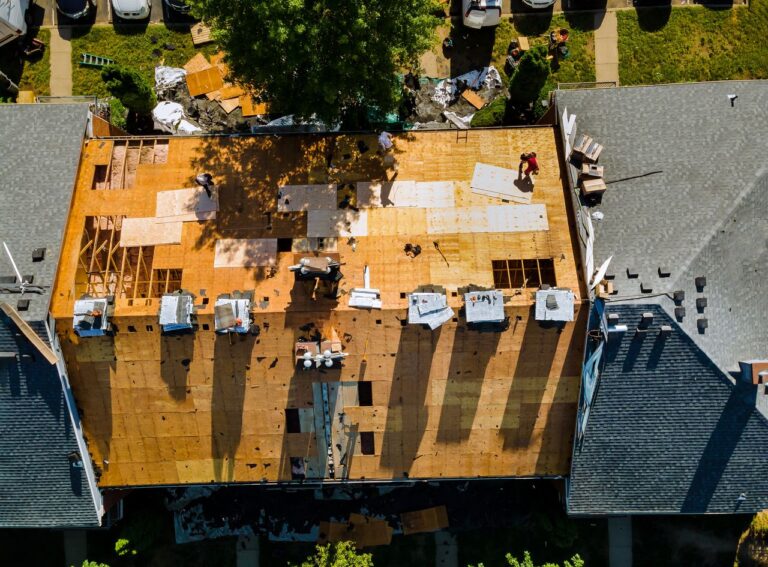
Some situations genuinely call for waiting, and an honest contractor will say so instead of pushing a job through. Full roof replacements are the clearest example, since a complete tear off exposes the entire deck at once and leaves a large area unsealed for an extended period. When a stretch of sustained cold and wind is forecast, delaying a replacement by a week or two and installing during a milder window produces a measurably better result. Temporary protection makes that wait possible, and a properly installed tarp or a section of self adhered membrane over a compromised area can hold water out for weeks. That approach costs less than redoing work that failed. It also keeps the manufacturer warranty clean, which matters a great deal down the road.
Active leaks, storm damage, and missing shingles do not get to wait, and cold weather is not a reason to leave a home exposed. Water entering a house causes damage every hour it continues, and the cost climbs from a simple repair to drywall, insulation, and framing work quickly. In those cases the right move is an immediate repair using cold weather technique, followed by a return visit in spring to verify the sealant bonded and to hand seal anything that did not. That follow up visit is the part most companies skip, and it is what separates a durable repair from a temporary one. Documenting the work with photographs also protects the homeowner during an insurance claim. Fast response and correct method are not mutually exclusive.
Judgment about timing depends on real conditions rather than the number on a thermometer. A 38 degree day with full sun, no wind, and a south facing slope can be perfectly workable, while a 48 degree day with heavy overcast, gusting wind, and a shaded north slope is not. Moisture on the deck is a hard stop regardless of temperature, since frost, dew, or leftover rain trapped under new shingles leads to rot and mold. Roofers check deck moisture before starting and wait for the surface to dry even if that pushes the start time to late morning. Safety also weighs into the decision, because frost on a steep slope makes for genuinely dangerous footing. A contractor who explains these tradeoffs clearly is giving you useful information, not making excuses.
Why You Need a Roofing Contractor Who Understands Cold Weather Shingle Sealant
The techniques that make a cold weather repair last are not complicated, but they are easy to skip when nobody is watching. Hand sealing every tab, warming the material, checking nail depth, and returning in spring to verify the bond all take extra time and cost the contractor money. Companies that treat winter work as a way to keep crews busy at any cost tend to cut exactly those corners, and the homeowner finds out two seasons later. Choosing a roofer who explains the cold weather plan up front tells you a great deal about how the rest of the job will go. Warranty coverage depends on those details too, since manufacturers can deny wind claims when required hand sealing was not performed. The right partner protects both the roof and the paperwork behind it.
Scheduling a Roof Inspection Before Cold Weather Arrives
The best time to address shingle sealant issues is before the first strong front of the season, while temperatures still support natural bonding. A fall inspection catches lifted tabs, cracked shingles, exposed fasteners, and failing flashing while there is still enough warmth for repairs to seal on their own. Loose shingles found in October reseal within days; the same shingles found in January need hand sealing and a spring follow up. That timing difference affects both the cost and the durability of the fix. A thorough inspection also covers the attic, where ventilation and insulation problems reveal themselves through staining and condensation.
Gutters belong in that same pre season check, since drainage problems and roof problems feed each other through the winter. Clogged gutters hold water at the eave edge, and when that water freezes it backs up under the first course of shingles where the seal is most important. Downspouts that discharge against the foundation create separate issues for the home. Clearing debris and confirming proper slope before the cold arrives removes a common source of winter leaks. Fascia and soffit condition matter here as well, because soft wood cannot hold a gutter through an ice event.
An inspection also creates a documented baseline that pays off if a storm hits later. Dated photographs of a roof in good condition make it much easier to demonstrate that damage came from a specific weather event rather than age or neglect. Insurance adjusters respond well to that kind of record, and it shortens the claim process considerably. North Texas gets hail and high wind in every season, so having current documentation is simply practical. Need your gutters checked before winter weather arrives? Click here for our gutter services.

Emergency Roof Repairs During Cold Weather in North Texas
Winter storms in the Metroplex arrive with little warning and often bring wind, ice, and rain together. When a section of shingles blows off during a January front, waiting for warm weather is not an option, and the homeowner needs someone who answers the phone. Fast temporary protection stops water intrusion while a permanent repair gets scheduled for the right conditions. Knowing which repairs can be completed immediately and which should be secured and revisited requires real experience with cold weather roofing. That judgment protects the home and the budget at the same time.
Insurance claims after a winter storm move faster when the contractor knows the process and documents everything from the first visit. Photographs of the damage before any temporary work goes on, a written scope of what was found, and clear notes about weather conditions all support the claim. Homeowners handling this alone often miss damage that an adjuster will not identify on their own, particularly on flashing, vents, and less visible slopes. Having a specialist on your side during that conversation changes the outcome more often than people expect.
Access to materials and crews during a regional weather event separates established companies from newcomers who appear after every storm. Local roofers with supplier relationships can get shingles that match your existing roof rather than something close enough. They also stay in the area long after the storm chasers move on to the next city. Warranty coverage means nothing if the company holding it is unreachable in two years.
Why Choose TM Roofing & Construction Group for Cold Weather Roof Repairs
TM Roofing & Construction Group is locally owned and operated in Bedford, and we handle winter work the same way we handle everything else. Our crews hand seal shingles when temperatures require it, keep materials warm, verify fastener depth, and come back to confirm the bond formed correctly. We back that work with lifetime manufacturer warranties and a ten year workmanship guarantee, and our BBB accreditation and 600 plus Facebook reviews reflect how we treat the homes we work on. Free estimates and flexible financing make it easier to address a problem before it grows.
We specialize in insurance claims and contribute $500 toward your deductible, which takes real pressure off after a storm. Our team documents damage thoroughly, communicates directly with your adjuster, and makes sure nothing gets overlooked in the scope. We are available 24/7 for emergencies, because a cold weather leak does not keep business hours. Homeowners across Bedford, Colleyville, Southlake, Keller, Grapevine, Hurst, Euless, and the surrounding communities call us for exactly that reason.
We treat every home like our own, and that standard shows up in the small decisions nobody else would notice. Getting your roof ready for cold weather now costs far less than repairing water damage later, and it takes one phone call to get started. Click here for our roofing services to schedule an inspection, or call TM Roofing & Construction Group at (817) 820-9596 and our team will get you on the schedule quickly.