How to Tell If Your Roof Needs a Repair or a Full Replacement
Roofs rarely fail all at once. Most problems start small, then spread over a few seasons of Texas heat, spring hail, and gusting wind. Homeowners in Bedford and across the DFW area ask the same question every summer: is this damage a simple repair, or is it time for a full roof replacement? The honest answer depends on three things, which are the age of the roofing system, how far the damage has spread, and the condition of the wood decking underneath. A few cracked shingles above the garage is not the same problem as granule loss across an entire slope. Knowing the difference protects your budget, your attic, and everything stored below it. It also keeps a small leak from turning into rotted decking and stained ceilings.
Signs Your Roof Needs a Repair Instead of a Full Replacement
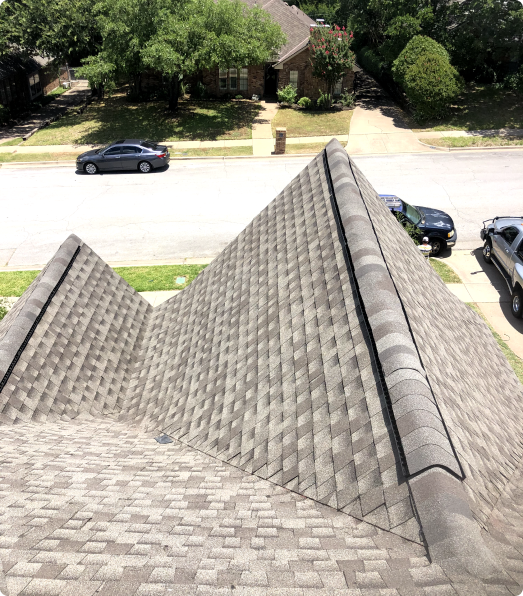
Not every roofing problem calls for a tear off. When damage is isolated to one slope, one penetration, or a handful of shingles, a targeted repair usually solves it. Roofs under fifteen years old with solid decking and intact underlayment are strong candidates for spot work. The key is location; damage clustered around a chimney, a pipe boot, or a valley often points to a flashing failure rather than a failing roof. A repair also makes sense when the rest of the field still holds its granules and lays flat against the deck. Texas homeowners sometimes replace a roof that had ten good years left in it. A trained inspector can tell you which situation you are in before you spend a dollar.
Common Roof Damage That Only Needs a Roof Repair
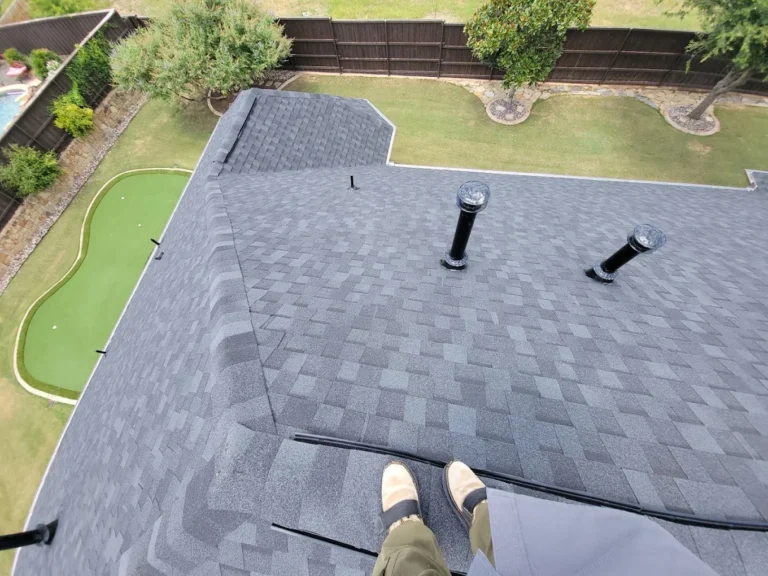
Pipe boots are the single most common source of leaks on North Texas homes. The rubber collar around a plumbing vent dries out under UV exposure, cracks open, and lets water run straight down the pipe into the attic. Replacing a boot is quick, inexpensive, and does not require touching the rest of the roof. Step flashing along a wall fails the same way; sealant shrinks, the metal separates, and water sneaks behind the siding. Chimney counterflashing is another frequent offender, especially on homes built in the 1980s and 1990s. None of these problems mean the shingles are finished. They mean a connection point needs attention.
Wind damage is often repairable when it stays confined to one area. A strong gust can lift and crease shingles along a rake edge or a ridge, breaking the seal strip without tearing the shingle free. If the creasing covers a small section, a roofer can remove the damaged pieces and weave in replacements. Missing shingles from a single storm event fall into the same category. The important step is checking the surrounding shingles for hidden creases, because a crease will fail during the next storm even though it looks fine today. Wind damage that appears on every slope tells a different story, and that is where a repair stops being the right call.
Small hail bruises scattered across one elevation can sometimes be repaired, though this requires careful judgment. A bruise is a soft spot where the impact fractured the fiberglass mat under the surface, and it will eventually open into a hole. Insurance adjusters in Texas typically count hits within a ten foot by ten foot test square to decide if a slope is compensable. Low hit counts on one slope often result in a repair authorization rather than a replacement. Shingle color matching becomes the challenge here, since sun exposure fades granules over time. An experienced crew sources the closest available match and places repairs where sightlines are least affected. Honest contractors tell you upfront when a perfect match is not possible.
How Roof Age Affects a Roof Repair Versus a Full Replacement
Age is the quiet factor that decides most repair versus replacement questions. Architectural asphalt shingles carry manufacturer ratings in the range of twenty five to thirty years, and three tab shingles usually last fifteen to twenty. Those numbers assume proper attic ventilation and moderate weather, neither of which describes a typical summer in Tarrant County. Roofs in this region routinely lose several years of service life to sustained heat and repeated hail. A roof at year eight with storm damage is worth repairing. A roof at year twenty two with the same damage rarely is, because you would be investing in a surface that is already near the end of its run.
Shingle flexibility tells you what the calendar cannot. New asphalt shingles bend without breaking; aged shingles crack the moment they are lifted. That brittleness matters during a repair, since a roofer has to lift surrounding courses to break the seal and slide new shingles into place. On an aging roof, that process damages the very shingles a technician is trying to save. The repair then grows in scope, and the cost climbs with it. This is why a small repair quote on an old roof sometimes comes back higher than expected.
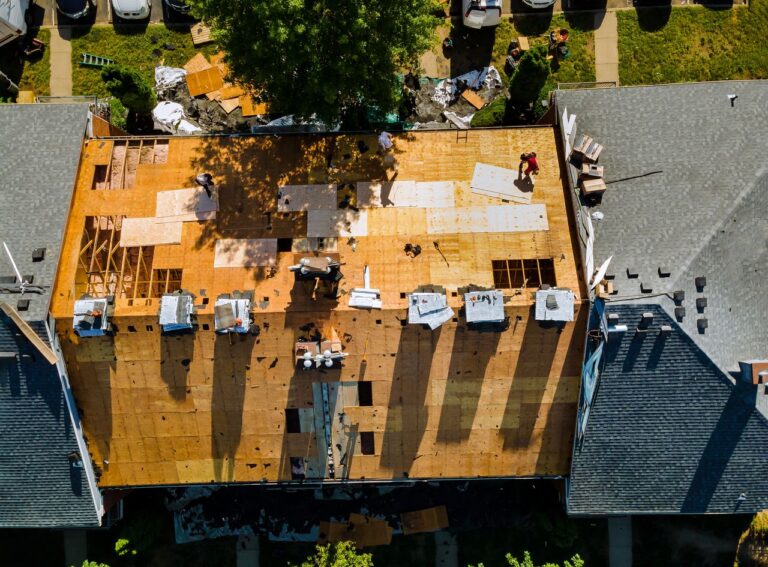
Layers matter too. Many older homes in Bedford, Hurst, and Euless carry two layers of shingles because a previous owner chose an overlay instead of a tear off. Current code in most Texas jurisdictions limits a structure to two layers, so a second overlay is not an option. Repairs on layered roofs are also harder to seal properly, since the nail pattern and the deck contact are compromised. If a roof already carries two layers and shows damage in multiple areas, replacement is generally the only path forward. A full tear off also lets the crew inspect and replace any soft decking that has been hidden for years.
When a Roof Repair Is the Smarter Choice in Texas Summer Heat
Summer creates a specific set of roofing problems that often respond well to repair. Thermal cycling expands and contracts every component on the roof each day, which loosens exposed fasteners and opens up sealant joints. Ridge vents, turbine bases, and satellite mount penetrations all shift slightly over hundreds of hot afternoons. A maintenance visit that reseals penetrations and replaces failed fasteners costs a fraction of a new roof. This work is best done before the fall storm season arrives. Catching it early keeps water out of the attic during the first heavy rain.
Attic ventilation problems also show up during summer, and they are usually fixable without a replacement. When intake at the soffits is blocked by insulation or paint, superheated air stacks up under the deck and bakes the shingles from below. Attic temperatures above 150 degrees accelerate granule loss and shorten shingle life dramatically. Adding proper intake, clearing blocked soffit vents, or correcting an unbalanced exhaust setup solves the root cause. The standard target is one square foot of net free vent area for every 150 square feet of attic floor, or one per 300 when a vapor barrier is present. Fixing ventilation protects the investment you already have in the roof.
Timing works in your favor during the dry stretch of the year. Sealants cure properly in warm weather, shingles seal down fast in direct sun, and crews can complete repairs without chasing rain delays. Homeowners who wait until the first cold front often find themselves scheduling emergency work instead of planned work. Emergency calls cost more and give you fewer options. A free estimate in July gives you time to compare scope and pricing without pressure. TM Roofing & Construction Group performs free inspections year round for exactly this reason.
Signs Your Roof Needs a Full Replacement Instead of a Repair
Some conditions take repair off the table entirely. Widespread damage, structural deterioration, and systems that have simply run out of service life all point toward a full roof replacement. The clearest indicator is damage that appears on every slope rather than one. Another is decking that flexes underfoot or shows daylight from inside the attic. Repeated leaks in different locations also signal a roof that is failing as a system. At that point, patching becomes an expense that buys very little time. Replacement resets the clock and restores full manufacturer warranty coverage.
Widespread Shingle Failure That Points to a Full Roof Replacement
Granule loss is the most visible sign that shingles have reached the end. Those granules are not decoration; they shield the asphalt layer from ultraviolet light. Once they wash away, the asphalt oxidizes, hardens, and begins to crack. Homeowners often notice granules collecting in gutters or at the bottom of downspouts after a rain. A small amount is normal on a new roof as loose material sheds. Heavy accumulation on an older roof means the protective layer is gone across large areas. When bald spots appear on multiple slopes, replacement is the correct answer.
Curling and cupping shingles tell the same story from a different angle. Edges lift as the asphalt dries out and the mat loses dimensional stability, which breaks the wind seal along every course. A curled roof catches wind the way an open hand catches air, and the next 60 mile per hour gust can strip entire sections. Cupping in the center of shingles usually points to trapped attic moisture or excessive heat from below. Once curling is general rather than isolated, no repair will flatten those shingles back down. The nail heads also begin to back out, creating hundreds of small entry points. Replacement addresses all of it at once.
Widespread hail damage produces the same conclusion. Adjusters look for random impact marks that expose the black mat, along with granule displacement and soft bruising under thumb pressure. Marks in a repeating pattern usually indicate manufacturing or foot traffic rather than hail. When bruising appears in test squares on all four elevations, the roof has lost its integrity everywhere, not just in one spot. Those bruises may not leak this month, but they open up within a year or two as the exposed mat degrades. Documenting the full extent right away matters for your insurance claim. Waiting past your policy deadline can cost you the entire benefit.
Decking and Structure Problems That Require a Full Roof Replacement
The wood deck under the shingles is the part homeowners never see. Older homes in the Mid Cities were often built with plank decking or thin plywood, and decades of moisture exposure take a toll. Soft, delaminated, or rotted decking cannot hold a nail, which means new shingles have nothing to grip. Roofers discover this only during a tear off, which is one reason replacement estimates include an allowance for deck repair. Sagging along a ridge line or between rafters is a warning sign visible from the street. Any visible dip means moisture has been working for a long time.
Daylight through the roof boards is another clear indicator. Step into the attic on a bright day and look up with the lights off. Pinholes of light mean water has a path, and any spot where light passes will let rain follow. Dark staining on the underside of the deck, especially near valleys and penetrations, confirms an active or past leak. Mold growth on rafters points to chronic moisture and poor ventilation working together. These conditions cannot be solved from the top side with sealant.
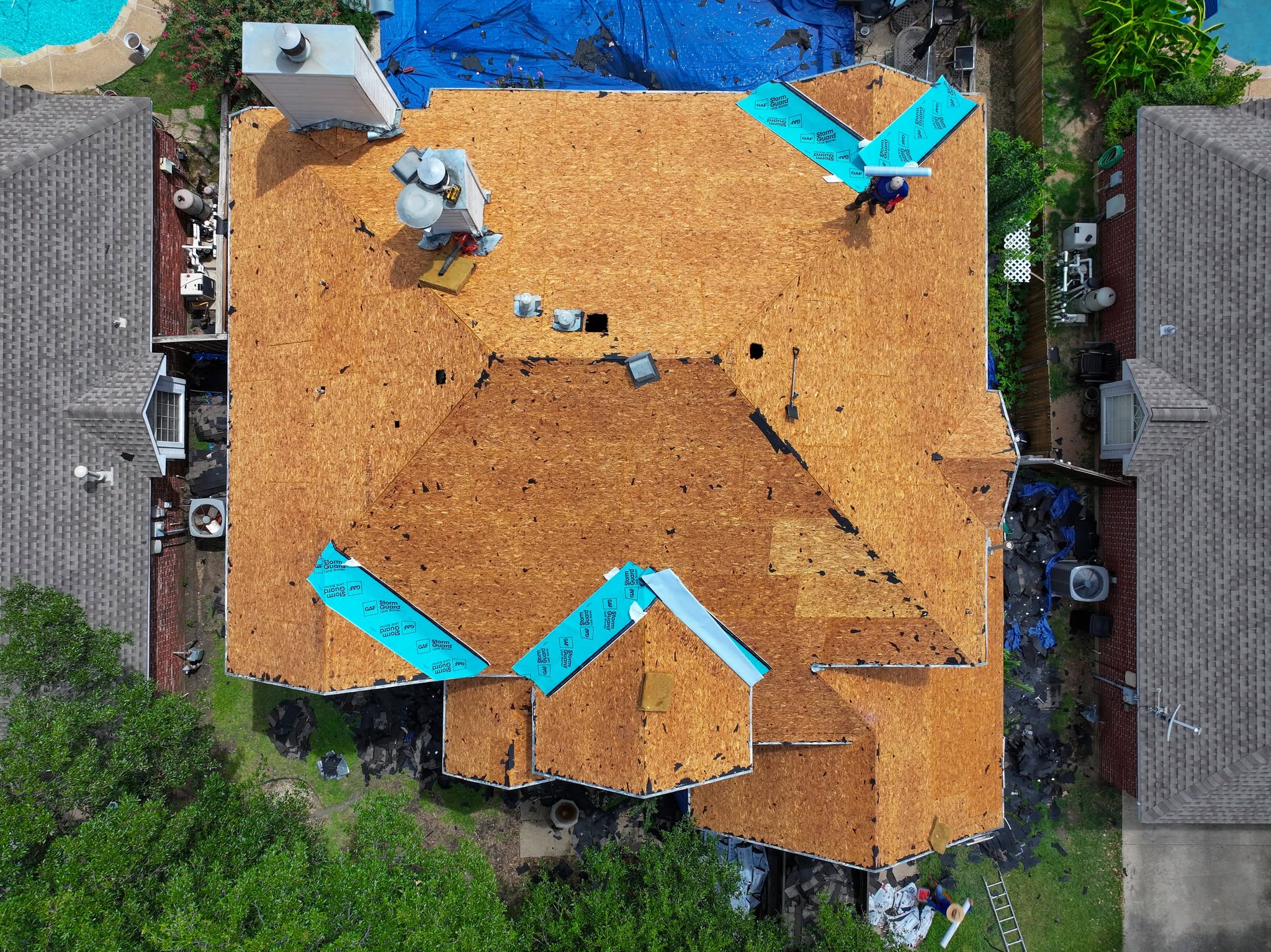
Multiple leaks in different areas almost always mean the underlayment has failed. Underlayment is the secondary water barrier between the shingles and the deck, and older felt becomes brittle and tears as the structure moves. Once it fails, every nail hole and every seam becomes a potential entry point. Chasing individual leaks on a roof in this condition is expensive and rarely successful. A full replacement includes new underlayment, new drip edge, new valley metal, and new pipe boots. That is what a complete system looks like, and it is what manufacturer warranties actually require.
Storm Damage and Insurance Claims That Lead to a Full Roof Replacement
North Texas sits in one of the most active hail corridors in the country. A single event can total a roof that looked fine the day before. Insurance policies in Texas generally cover sudden storm damage, though they exclude normal wear and deterioration. This distinction drives the entire claims process, so accurate documentation of storm damage matters enormously. Photos, test squares, and a written inspection report give an adjuster what they need to approve the correct scope. Homeowners who file without that documentation often receive a repair authorization when a replacement was warranted.
Policy type affects your out of pocket cost. Replacement cost value policies pay the full cost to replace the roof, with recoverable depreciation released after the work is finished. Actual cash value policies pay the depreciated value only, which leaves a larger gap for the homeowner to cover. Many Texas carriers have also moved to percentage based wind and hail deductibles rather than flat amounts. Reading your declarations page before a storm hits prevents an unpleasant surprise afterward. A roofing contractor experienced with claims can walk you through what your policy actually says.
Deadlines are real and they are shorter than people expect. Many Texas policies require notice of a claim within a defined window after the date of loss, and some carriers enforce that strictly. Damage from a spring hail event in April should be documented now, not next winter. Delaying gives the carrier grounds to argue the damage came from wear rather than the storm. TM Roofing & Construction Group provides free storm inspections and reports so you have documentation in hand. We work as insurance claim specialists and stay with you through the adjuster meeting.
Why You Need a Professional Roof Inspection Before Any Repair or Replacement
Guessing from the driveway leads to bad decisions in both directions. Some homeowners replace roofs that needed a four hundred dollar repair; others patch roofs that should have been replaced two storms ago. A professional roof inspection settles the question with evidence instead of assumptions. A qualified inspector walks the slopes, checks the attic, measures test squares, and photographs what they find. You end up with a clear scope, a written report, and a real number. That is the starting point for any sound decision about your home.
What a Professional Roof Inspection Reveals About a Repair or Replacement
A thorough inspection covers far more than shingle condition. The inspector examines flashing at every wall, chimney, and skylight, then checks pipe boots, vents, and ridge caps individually. Valleys get close attention because they carry the highest water volume on any roof. Gutters and downspouts are reviewed for granule accumulation and proper drainage away from the foundation. Each of these areas can produce a leak that looks like a shingle problem from inside the house.
The attic portion of the inspection is where hidden problems surface. Staining, mold, compressed insulation, and blocked soffit vents all show up from below. An inspector also checks for daylight, soft decking, and evidence of past repairs that were never finished correctly. This interior view often changes the recommendation entirely. A roof that looks acceptable from above may be sitting on decking that failed years ago.
The final report should give you options rather than a single price. A good contractor explains what a repair would cover, what a replacement would include, and roughly how long each option should last. You should also learn about material choices, including impact resistant shingles that can qualify for insurance discounts in hail prone counties. Clear information lets you decide on your own timeline. No homeowner should feel rushed into a roof decision.
How to Schedule a Roof Inspection Before the Next Storm Season
The best time to inspect a roof is during a dry stretch, before the next round of weather arrives. North Texas typically sees renewed storm activity in the fall, which leaves a narrow window for planned work. Scheduling now means any needed repairs are finished before the wind picks up. It also means you avoid the long wait lists that follow every major hail event. Free estimates make the visit a simple decision.
Bring your questions and your paperwork to the appointment. Knowing the age of the roof, the last replacement date, and your insurance deductible helps the inspector give you accurate guidance. If you have receipts from previous repairs, those help establish maintenance history for a future claim. Photos of any interior stains are useful as well. The more context you provide, the more precise the recommendation.
Financing keeps a necessary roof from becoming a crisis. Flexible payment options let homeowners move forward on urgent work without draining savings, and TM Roofing & Construction Group offers $500 toward your deductible on qualifying insurance claims. Emergency service is available 24/7 when a leak cannot wait until morning. Call (817) 820-9596 to schedule a free inspection. A short visit today prevents a large expense later.
Why Choose TM Roofing & Construction Group for Your Roof Repair or Replacement
TM Roofing & Construction Group has earned more than 600 Facebook reviews and holds BBB accreditation. That record comes from straight answers, clean job sites, and crews who finish what they start. We tell homeowners when a repair is enough, even when a replacement would be the larger sale. Trust is built one honest inspection at a time. Our neighbors in Bedford and the surrounding communities keep calling us back for that reason.
Every replacement we install carries lifetime manufacturer warranties on materials plus our own ten year workmanship guarantee. Those two protections cover the material and the installation, which is the combination that actually matters when a problem appears. We install to manufacturer specification so your warranty stays valid. Our crews correct ventilation and flashing details rather than covering them up. Doing it right the first time is cheaper for everyone involved.
We are locally owned and operated, and we treat your home the way we treat our own. Our team specializes in insurance claims and will meet your adjuster on site to make sure the scope reflects the real damage. Free estimates, flexible financing, and 24/7 availability remove the obstacles that keep homeowners waiting. Reach us at 1301 Schumac Ln, Bedford, TX 76022, by phone at (817) 820-9596, or by email at tmconstructiongroup@mail.com. Let us take a look before the next storm does.