What Those Dark Streaks on Your Roof Actually Are
Those dark streaks running down the shingles are not dirt, and they are not soot from a chimney. They are a living organism called Gloeocapsa magma, a type of blue green algae that settles on asphalt shingles and feeds on the limestone filler inside them. In North Texas, the mix of Gulf humidity, heavy summer dew, and tree shade creates close to perfect growing conditions from late spring through early fall. Most homeowners in Bedford, Colleyville, and Grapevine notice the staining first on the shaded side of the house, then watch it creep across the rest of the roof over a few seasons. The streaks always run downhill, because rain carries the colony from the ridge toward the eave a little further with every storm. Left alone, the growth spreads, darkens, and slowly works against the granules that protect your shingles from ultraviolet light. The good news is that the stain itself is treatable, and the roof underneath is often in far better shape than the discoloration suggests. The bad news is that the same shade and moisture feeding the algae can hide real problems, which is exactly why the streaking deserves a closer look rather than a shrug.
What Those Dark Streaks on Your Roof Actually Are and Why They Form
Algae staining is one of the most common roof complaints in Tarrant and Denton counties, and it is also one of the most misunderstood. Homeowners frequently assume the roof is dirty, defective, or wearing out early, when the real answer is biological. A single airborne cell lands on a shingle, finds moisture and a food source, and begins to multiply. The colony protects itself from sunlight by producing a dark pigmented sheath, and that sheath is what your eyes register as a black or brown streak. Growth accelerates during humid stretches and slows during dry heat, which is why the stain seems to appear overnight after a wet spell. Roof age plays a role too, since older shingles hold moisture longer and offer a rougher surface for the colony to grip. Understanding the cause matters, because the wrong cleaning method causes far more damage than the algae ever will.
The Algae Behind the Dark Streaks on Your Roof
Gloeocapsa magma is a cyanobacteria, which means it produces its own energy through photosynthesis and needs only moisture, light, and a mineral food source to thrive. Asphalt shingles supply that food source in the form of limestone, or calcium carbonate, which manufacturers add as a filler to give shingles weight, body, and fire resistance. The algae consume that filler slowly over months and years. As the colony grows, it produces a dark protective outer layer that shields it from ultraviolet radiation, and that layer is the visible stain. This is why the streaks look flat and matte rather than glossy. It is also why scrubbing rarely works; you are dealing with a living organism rooted in the shingle surface, not a layer of grime sitting on top of it. Killing the colony is the only approach that produces lasting results.
The algae arrive by air. Spores travel on wind currents, carried from neighboring rooftops, wooded lots, and standing water, and they also hitch rides on birds and squirrels that move between houses. This is why entire streets in Keller, Southlake, and Trophy Club often show the same staining pattern within a year or two of each other. One roof develops a colony, the wind carries cells to the next house, and the spread continues down the block. Newer neighborhoods are not immune, though the growth usually takes several years to become visible. A roof can carry the organism long before anyone notices a change in color. By the time streaking is obvious from the driveway, the colony has usually been established for two or three years.
Timing follows the weather. Growth surges when humidity stays high and shingles stay damp for several hours each morning, which describes most of the North Texas summer and a good portion of spring. Long dry stretches slow the colony down but do not kill it; the organism goes dormant and resumes as soon as moisture returns. Homeowners often report that the roof looked fine in March and looked terrible by August, and that observation is usually accurate. Dew is the quiet culprit, since a shaded slope can stay wet for hours after sunrise even on a rainless day. Roofs near creeks, greenbelts, and heavily landscaped lots stain faster than roofs on open, sunny lots. None of this reflects poorly on the homeowner or on the quality of the original installation.
Why the Dark Streaks on Your Roof Run Downward in Shaded Areas
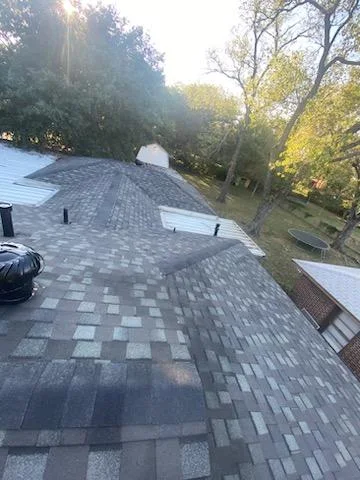
The vertical streaking pattern comes down to gravity and rainfall. A colony establishes near the ridge, where it collects the first moisture of the day, and every rainstorm washes living cells downslope toward the eave. Those cells settle in the granule texture below and start new growth. Repeat that cycle across dozens of storms and you get the long tapered streaks that look almost painted on. The stain is usually darkest at the top and fades toward the bottom, which tells you the direction of travel. Wind driven rain can widen the pattern until the streaks blend into one continuous discoloration. At that point the whole slope looks weathered even though the shingles may still have years of service left.
Orientation matters more than most people expect. North facing slopes receive the least direct sun, hold dew the longest, and almost always stain first and worst. East facing slopes come next, since morning sun burns off moisture slowly. West and south facing slopes dry fast and often stay clean for years on the same house, which produces the odd effect of one side of a roof looking new while the other looks neglected. Tree canopy compounds the problem by blocking sun and dropping organic debris that holds water against the shingles. Overhanging limbs in older neighborhoods around Hurst, Euless, and Richland Hills are a frequent contributor. Trimming branches back to open the slope to sunlight is one of the simplest preventive steps available to a homeowner.
Roof features shape the pattern as well. Dormers, chimneys, and skylights cast their own shade and create wet zones that stain first. Valleys concentrate runoff and often show a clean channel down the center where water moves too fast for the colony to hold on. You may also notice clean stripes running down from metal flashing, vent pipes, or chimney caps. That is not a coincidence. Rainwater picks up trace amounts of zinc or copper as it crosses those metal surfaces, and those metals are naturally toxic to algae. That accidental effect is the same principle behind intentional treatments, and it is a useful clue when diagnosing a roof.
How North Texas Weather Feeds the Dark Streaks on Your Roof
Our climate is close to ideal for roof algae. Warm nights, high dew points, and frequent afternoon storms keep shingles damp during the exact months when temperatures encourage rapid growth. Summers here deliver heat and humidity together, which is a very different situation from a dry desert climate where staining stays rare. Spring storm season adds regular rainfall and cloud cover that slows drying. Fall brings leaf litter that traps moisture in valleys and along eaves. Only the driest weeks of late summer genuinely set the colony back. Across a full year, the growing conditions far outnumber the suppressing conditions.
Storm damage accelerates the process in ways that surprise homeowners. Hail knocks granules loose and leaves the asphalt surface rougher and more porous, giving algae more texture to cling to and more moisture retention. Wind lifts shingle edges and drives debris across the surface. Even a storm that causes no leaks can change the surface condition enough to invite faster growth. This is one reason a roof that survived a hail event without obvious damage sometimes stains heavily over the following two summers. The staining is a symptom, and the underlying granule loss is the real story. A trained eye can tell the two apart from the roof surface, though rarely from the ground.
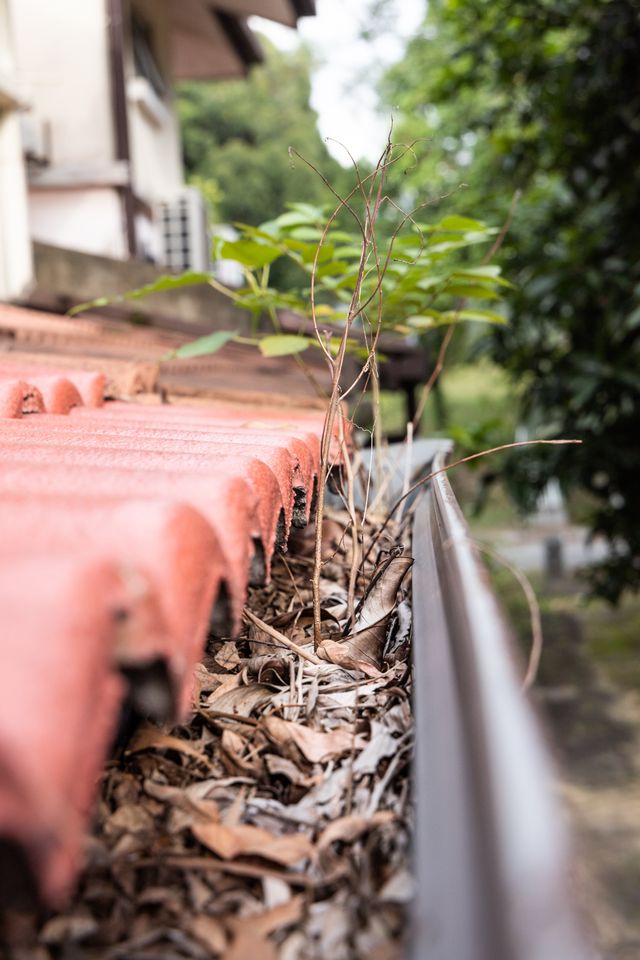
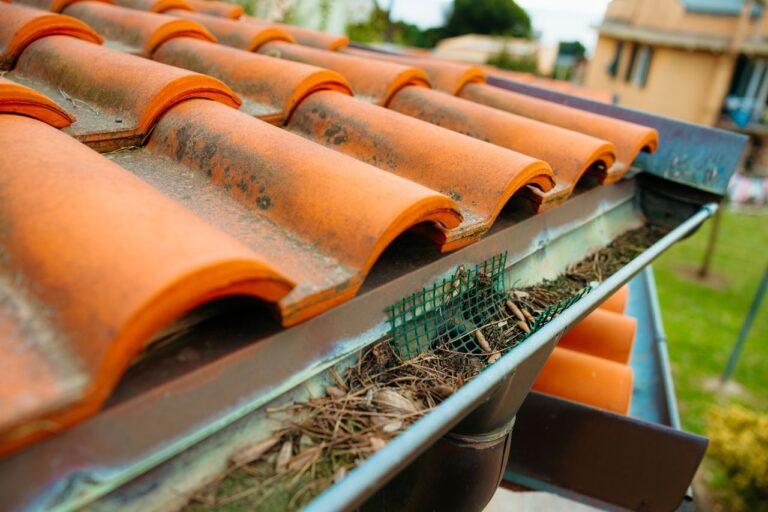
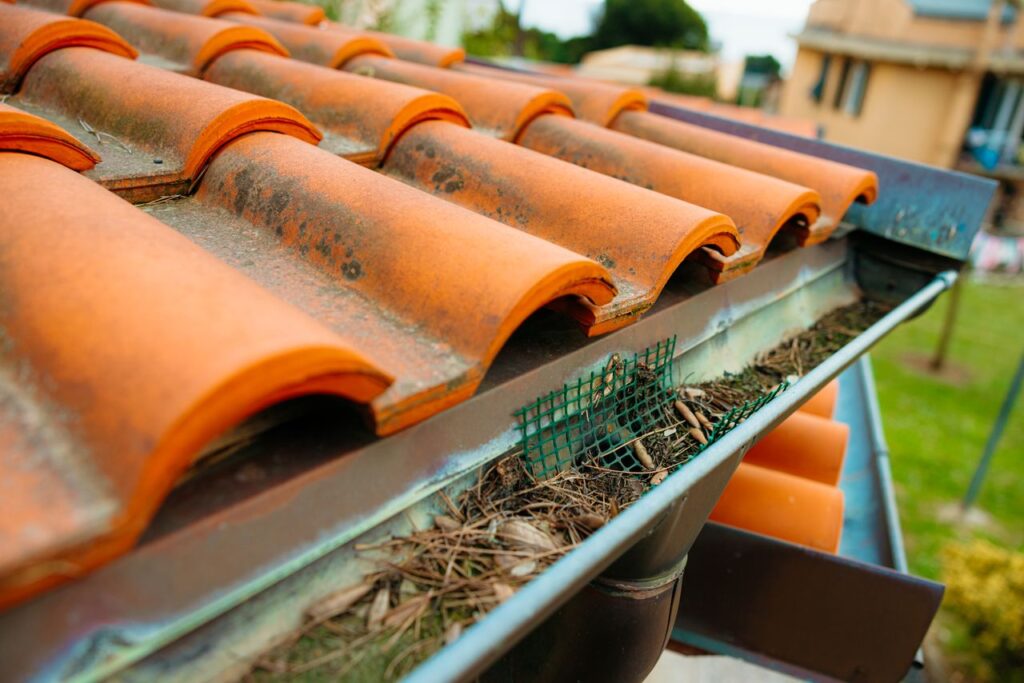
Water management ties the whole picture together. Clogged or undersized gutters allow water to back up under the first course of shingles, keeping the eave line damp long after a storm passes. Downspouts that discharge onto a lower roof section create a permanently wet path where algae thrive. Overflowing gutters also splash back onto fascia and siding, spreading the staining beyond the roof itself. Homes with mature trees need more frequent cleaning than builders typically anticipate. Fixing drainage often does more for long term appearance than any single cleaning. Seeing the heaviest streaks near your gutter line? Click here for our gutter services.
How the Dark Streaks on Your Roof Affect Shingles, Energy Costs, and Home Value
The most common question we hear is simple: does this actually hurt anything? The honest answer is that algae staining starts as a cosmetic issue and gradually becomes a performance issue. In the first year or two, the colony is mostly surface level and the shingles beneath are unaffected. Over five to ten years of continuous growth, the consumption of limestone filler weakens the bond that holds protective granules in place. Granules are what shield the asphalt from ultraviolet light, so losing them early shortens the usable life of the roof. The stain also darkens the surface, which changes how much heat the roof absorbs. Add the effect on resale appearance and the case for addressing it becomes practical rather than vain.
Do the Dark Streaks on Your Roof Damage Shingles
Early staining does no structural harm, and no reputable roofer should tell you a roof needs replacement because it looks streaked. The shingles are still sealing, still shedding water, and still doing their job. What changes over time is the surface chemistry. As the colony consumes limestone filler, the matrix that anchors granules loosens, and granules begin releasing more easily during rain and wind. Homeowners notice granule accumulation in gutters and at the base of downspouts. That loss exposes more asphalt to sunlight, and ultraviolet exposure is the primary cause of shingle aging. A roof with a decade of unchecked growth can lose several years of expected service life.
Heat absorption is the second effect, and it is measurable. Light colored shingles reflect a portion of solar energy, and a dark biological film reduces that reflectivity. The roof deck runs hotter, the attic runs hotter, and the air conditioning system works harder during a Texas August. The difference is not dramatic on a single afternoon, but it compounds across a long cooling season. Homes with marginal attic ventilation feel it most, since hot air has nowhere to escape. Higher deck temperatures also accelerate the natural drying and cracking of asphalt. Cleaning the roof and improving ventilation together produce a better result than either step alone.
Appearance carries real financial weight. A streaked roof reads as an old roof to buyers, appraisers, and insurance inspectors, even when the shingles have significant life remaining. Real estate agents routinely recommend roof cleaning before listing for exactly this reason. Some homeowners associations in Southlake, Colleyville, and Highland Village send notices about roof discoloration. Insurance carriers occasionally flag heavy staining during a policy inspection and request documentation of roof condition. A professional evaluation and a written condition report resolve most of those situations quickly. The stain does not need to become a negotiating point at closing.
How to Tell the Dark Streaks on Your Roof From Moss, Lichen, and Storm Damage
Algae presents as a flat stain with no thickness. Run a hand across it and the shingle surface feels normal; the color simply will not brush off. The streaks follow water flow, taper toward the eave, and concentrate on shaded slopes. Color ranges from charcoal gray to deep brown to nearly black depending on colony age and shingle color. This is the most common condition by far in our area. It responds well to treatment and rarely signals anything worse underneath. Correct identification saves homeowners from unnecessary repairs.
Moss is a different organism and a more serious one. It grows green, thick, and spongy, holds water like a sponge, and typically starts along shingle edges and in valleys where debris collects. Because moss retains moisture directly against the shingle, it promotes rot in the decking below and can lift shingle edges as it expands. Lichen is the third possibility, appearing as crusty gray green or pale blotches that look almost painted on. Lichen is a partnership between a fungus and an algae, and its root structures penetrate the asphalt itself. Removing lichen often pulls granules with it and leaves visible pockmarks. All three conditions can appear on the same roof, and each calls for a different approach.
Actual damage looks nothing like biological growth. Hail bruising shows as round soft spots with granule loss and sometimes a fractured mat beneath. Wind damage shows as creased, lifted, or missing shingles, usually along ridges and rakes. Thermal aging shows as widespread granule loss with exposed asphalt and shingle edges that curl upward. These conditions require repair or replacement, not cleaning, and they are frequently hidden beneath heavy staining where a ground level view misses them entirely. A qualified inspector separates cosmetic issues from functional ones and documents both. Not sure what you are looking at up there? Click here for our roofing services.
Safe Ways to Remove the Dark Streaks on Your Roof
Pressure washing is the single fastest way to destroy an asphalt roof. High pressure strips granules by the thousands, drives water under shingle courses, and voids virtually every manufacturer warranty in the industry. Roofs that have been pressure washed often show visible wear stripes for the rest of their service life. The Asphalt Roofing Manufacturers Association recommends a very different approach: a solution of equal parts chlorine bleach and water, applied to the surface, allowed to dwell, then rinsed with low pressure water. This method kills the organism without disturbing the granules. Landscaping needs protection, since the runoff harms plants and grass. Thorough pre wetting and post rinsing of surrounding beds prevents most of that damage.
Safety is the reason most homeowners should not attempt this themselves. Asphalt shingles become slick when wet, and a cleaning solution makes them slicker still. Roof pitches in newer North Texas subdivisions are often steep enough that a slip becomes a fall. Add a ladder, a hose under pressure, and a chemical solution, and the risk climbs quickly. Professional crews carry fall protection, use soft wash equipment calibrated for shingle surfaces, and control runoff properly. Results appear within a few days as the dead colony weathers away with rain. Regrowth typically returns within two to five years depending on shade, humidity, and drainage.
Prevention extends the results considerably. Installing strips of zinc or copper near the ridge allows rainwater to carry trace metal ions down the slope, suppressing new growth continuously. This works best on roofs that have already been cleaned, since the metal prevents growth rather than removing it. Trimming back overhanging limbs increases sun exposure and shortens drying time. Keeping gutters clear stops water from backing up along the eave. At replacement time, algae resistant shingles are the strongest option available, since they contain copper infused granules built into the surface and carry limited staining warranties that commonly range from 10 to 25 years depending on the manufacturer and product line.
Why You Need a Professional Roof Inspection When Dark Streaks Appear
Staining is visible from the ground, but everything that matters is not. A roof that streaks heavily on one slope may also have loose flashing, deteriorated pipe boots, separated seams, or hail bruising that nobody has documented. Those conditions cost far more to ignore than to address. An inspection gives you a clear picture of the roof’s actual condition, a realistic remaining service life, and a written record that helps with insurance and resale. It also tells you exactly which treatment path makes sense, since cleaning a roof with five years left is a very different decision from cleaning one with fifteen. Getting an accurate answer costs nothing when the estimate is free.
What a Professional Roof Inspection Finds Beneath the Dark Streaks on Your Roof
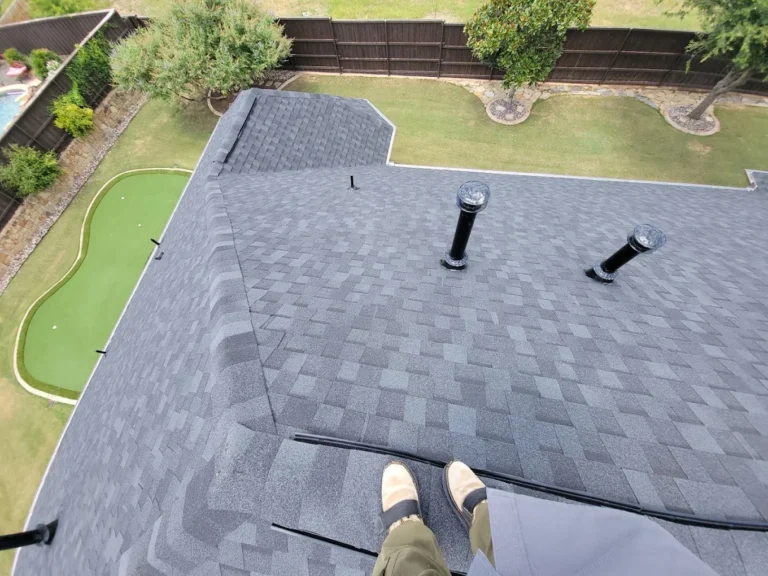
A proper inspection starts on the roof surface, not from a ladder at the edge. Inspectors check granule coverage, shingle sealing, and the condition of the mat in the areas where staining is heaviest. Flashing at chimneys, walls, and valleys gets close attention, since those transitions cause more leaks than shingle failure does. Pipe boots crack and split in Texas heat, often within eight to twelve years, and they are a leading source of interior water stains. Ridge and soffit ventilation gets measured against the attic volume it serves. Each of those findings gets documented with photographs.
The attic tells the other half of the story. Decking discoloration, damp insulation, rusted fasteners, and daylight at the eaves all reveal problems invisible from outside. Poor ventilation shows up as elevated temperatures and moisture on the underside of the deck, which shortens shingle life from below while algae works from above. Correcting airflow often solves two problems at once. Homeowners are frequently surprised at how much condition information an attic provides. A complete inspection covers both sides of the roof assembly.
The result is a plan, not a sales pitch. Some roofs need nothing more than a soft wash and a gutter cleaning. Others need targeted repairs to flashing or boots before any cleaning happens. A smaller number turn out to have storm damage that qualifies for an insurance claim, which changes the financial picture entirely. Knowing which category your roof falls into prevents both overspending and neglect. Every homeowner deserves that clarity before making a decision.
Preventing the Dark Streaks on Your Roof After Cleaning or Replacement
Prevention starts with sunlight and airflow. Opening up shaded slopes by trimming trees back from the roofline shortens the daily window when shingles stay damp. That single change slows regrowth more than most homeowners expect. Clearing leaves and pine needles from valleys and gutters removes the organic debris that holds moisture in place. Twice yearly cleanouts are reasonable for most homes in our area, and more often for lots with mature trees. Small habits protect a large investment.
Drainage deserves equal attention. Gutters that overflow soak the eave line and keep the lower courses of shingles damp for days after a storm. Downspouts that dump onto a lower roof create a permanent wet track where algae will always return first. Proper sizing, correct pitch, and extensions that carry water away from the structure eliminate those trouble spots. The same water that stains a roof also damages fascia, siding, and foundations. Handling drainage correctly pays off in several directions at once. Noticing staining spreading onto the walls below? Click here for our siding services.
Replacement is the strongest reset available. Modern algae resistant shingles carry copper infused granules distributed throughout the surface, which suppress growth for the length of the staining warranty. Pairing those shingles with balanced ridge and soffit ventilation, new flashing, and properly sized gutters gives a roof the best possible start. Manufacturer warranties on the shingles themselves now commonly run for the life of the home when installed to specification. That combination turns a recurring maintenance headache into a solved problem. It is the right answer for roofs already near the end of their service life.
Why Choose TM Roofing & Construction Group for the Dark Streaks on Your Roof
We are locally owned and operated, and we treat every home in Bedford, Hurst, Euless, and the surrounding communities the way we would treat our own. Our reputation is built on more than 600 Facebook reviews and accreditation with the Better Business Bureau, which means our work is documented by the people who have actually hired us. We tell homeowners honestly when a roof needs nothing more than cleaning, and we tell them just as honestly when a roof needs replacement. That straightforward approach has kept us busy across Tarrant and Denton counties for years. Trust is earned one roof at a time.
Our work is backed by lifetime manufacturer warranties and a 10 year workmanship guarantee, so the installation itself carries protection alongside the materials. We are insurance claim specialists, and we handle the documentation, adjuster meetings, and paperwork that make storm claims frustrating for homeowners. We also contribute $500 toward your deductible on qualifying claims. Flexible financing is available for projects that fall outside insurance coverage. Free estimates are standard, and we are available 24 hours a day for emergencies.
Dark streaks are worth understanding, and they are worth acting on before they turn into granule loss and premature aging. A short conversation and a thorough inspection will tell you exactly where your roof stands and what it needs next. Reach our team at (817) 820-9596 or stop by our office at 1301 Schumac Ln, Bedford, TX 76022 for a free evaluation and a clear recommendation. Serving your neighborhood directly? Click here for our Bedford roofing services. We will get you a straight answer and a roof you do not have to think about.