The Homeowners Guide to Preparing a Roof for North Texas Fall Storms
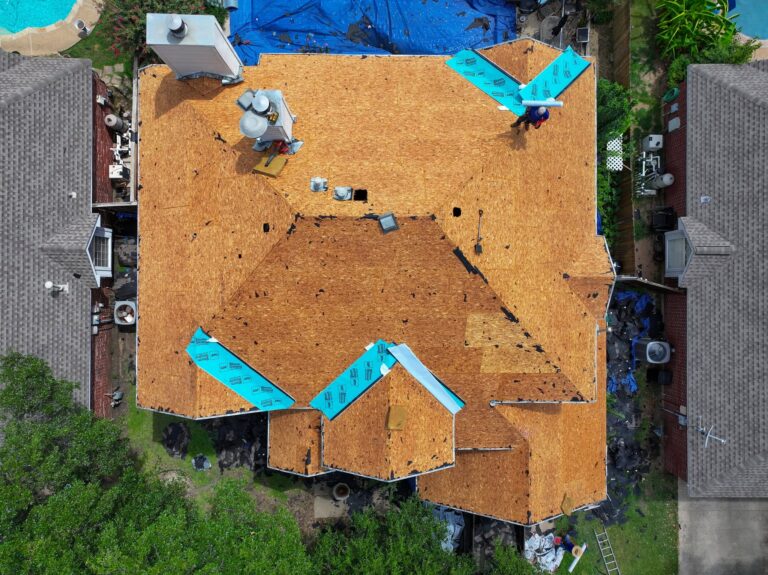
North Texas gets a second severe weather season every fall, and most homeowners forget about it until the first strong cold front rolls through. Dry air pushes south out of the Panhandle, Gulf moisture surges north, and the collision line often sets up right over the Dallas Fort Worth metroplex. That collision produces hail, straight line winds above 60 mph, and the occasional fall tornado, usually between late September and early November. Roofs in Bedford, Colleyville, Southlake, and the surrounding cities take the brunt of it because they have already spent an entire summer baking under UV exposure and 100 degree surface temperatures. Shingle sealant softens, pipe boot collars crack, fasteners back out, and gutters fill with the last of the summer debris. A roof that survived spring hail season is not automatically ready for fall; it is a year older and a season more brittle. The good news is that late summer and early fall give you a real window to inspect, repair, and reinforce before the first significant storm arrives. Preparing a roof for North Texas fall storms is mostly about small, unglamorous work done early, and it consistently costs less than emergency repairs done in the rain.
How to Prepare a Roof for North Texas Fall Storms Before the Season Starts
Preparing a roof for North Texas fall storms starts with an honest assessment of what the summer did to it. Asphalt shingles in this region routinely reach surface temperatures near 160 degrees on July and August afternoons, which accelerates granule loss and dries out every rubber and sealant component on the roof. That heat also softens the adhesive strips between shingle courses, and repeated softening and cooling cycles weaken the bond over time. Fall prep addresses three separate systems: the field of the roof, the penetrations and transitions, and the drainage path that carries water away from the structure. Skipping any one of the three leaves an entry point that a 50 mph wind gust and two inches of rain will find quickly. Most homes need only a few hours of corrective work if the issues are caught early. The homes that end up with interior damage are almost always the ones where a small, known problem sat unaddressed through the first cold front. Getting ahead of the season is the single most effective thing a homeowner in Tarrant or Denton County can do.
The Roof Inspection That Prepares a Roof for North Texas Fall Storms
A proper pre season roof inspection covers far more than a walk around the yard with binoculars. From the ground, a homeowner can catch obvious problems like missing shingles, sagging gutter runs, lifted ridge caps, and debris piles in the valleys. What the ground view misses is the condition of the sealant strips, the nail heads, the pipe boot collars, and the flashing laps, and those are exactly the components that fail during a wind driven rain event. A trained inspector walks the roof and checks shingle flexibility by hand, since brittle shingles crack under foot and telegraph how much life the roof has left. The inspector also looks at the decking from inside the attic, checking for daylight at the eaves, dark staining around penetrations, and any soft or delaminated plywood. Documentation matters just as much as the findings themselves. Photos taken before the storm season establish a clear baseline of roof condition, which becomes valuable if you later file an insurance claim.
Age drives most of the decisions that come out of an inspection. A three tab asphalt roof in North Texas typically delivers 15 to 20 years of service, while architectural laminate shingles often reach 20 to 25 years under the same conditions. Hail exposure shortens both numbers considerably, and many metroplex roofs are replaced well before their rated lifespan because of accumulated storm impacts. If your roof is past year 15 and has already absorbed a hail event or two, the inspection is less about patching and more about deciding when replacement makes sense. Replacing before storm season is far easier than replacing during it, when material demand spikes and crews across the region book out for weeks. Homeowners who wait until after a major hail event often sit under a tarp for a month while the whole metroplex competes for the same labor. Timing the work yourself keeps you in control of the schedule and the material selection.
The inspection should also evaluate attic ventilation, because ventilation quietly determines how long the roof lasts. Building code guidance calls for roughly one square foot of net free vent area per 300 square feet of attic floor when intake and exhaust are balanced, and many older North Texas homes fall short on the intake side. Blocked soffit vents trap superheated air against the underside of the decking, which cooks the shingles from below and shortens their service life measurably. Mixed exhaust systems create another common problem: a ridge vent installed alongside wind turbines or a powered fan will short circuit, pulling air from the nearest opening instead of drawing it up from the eaves. That imbalance leaves dead air pockets and moisture buildup in the attic through the humid fall months. Correcting ventilation before storm season protects the roof and lowers cooling costs at the same time. Need a full roof evaluation before the fronts start moving through? Click here for our roofing services.
Sealing, Flashing, and Fastener Checks That Prepare a Roof for Fall Storms
Flashing failures cause more leaks in North Texas homes than missing shingles do. Every place where the roof plane meets something else is a transition, and every transition depends on metal, sealant, or both to stay watertight. Step flashing along a wall, counterflashing at a chimney, kickout flashing at the bottom of a wall run, valley metal, and drip edge along the eaves and rakes all need to be inspected individually. Sealant at these locations has a working life of roughly five to ten years in this climate, and Texas sun degrades it faster than the manufacturer’s rating suggests. Cracked or shrunken sealant beads look minor from the ground but open a direct path for wind driven rain. A missing kickout flashing is especially damaging because it dumps roof runoff behind the siding, where it rots sheathing silently for years. Fall prep should include a full pass over every transition with fresh sealant applied where the old material has failed.
Pipe boots deserve their own attention because they are the most predictable failure point on a North Texas roof. The rubber collar that seals around a plumbing vent stack typically cracks somewhere between year 8 and year 15, and UV exposure at this latitude pushes many of them toward the early end of that range. Once the collar splits, water follows the pipe straight into the attic, and the resulting ceiling stain usually appears several feet away from the actual leak. Replacing a failing boot is inexpensive and fast, especially compared to repairing drywall, insulation, and framing after months of slow intrusion. Newer boot designs use a metal collar with a replaceable rubber seal or a lead flashing that outlasts standard rubber by a wide margin. Any boot showing surface cracking, chalking, or gaps at the pipe should be replaced before fall storms arrive.
Fasteners and sealant strips determine how a roof performs under wind load. Most architectural shingles carry a wind rating between 110 and 130 mph, but that rating assumes the correct nail count, correct nail placement in the nailing zone, and a fully bonded sealant strip. Nails driven too high, overdriven, or underdriven all reduce holding power dramatically, and a shingle with four nails instead of six loses a meaningful share of its rated resistance. Sealant strips need warm temperatures to bond properly, which is why work completed in late summer and early fall seals faster than work done in December. Exposed nail heads on ridge caps, flashing, and previous repairs should be sealed or replaced, since each one is a small hole waiting for standing water. Wind damage often starts at a single lifted edge and peels progressively across a roof section. Correcting the small stuff now prevents the cascading failure later.
Gutter and Drainage Work That Prepares a Roof for North Texas Fall Storms
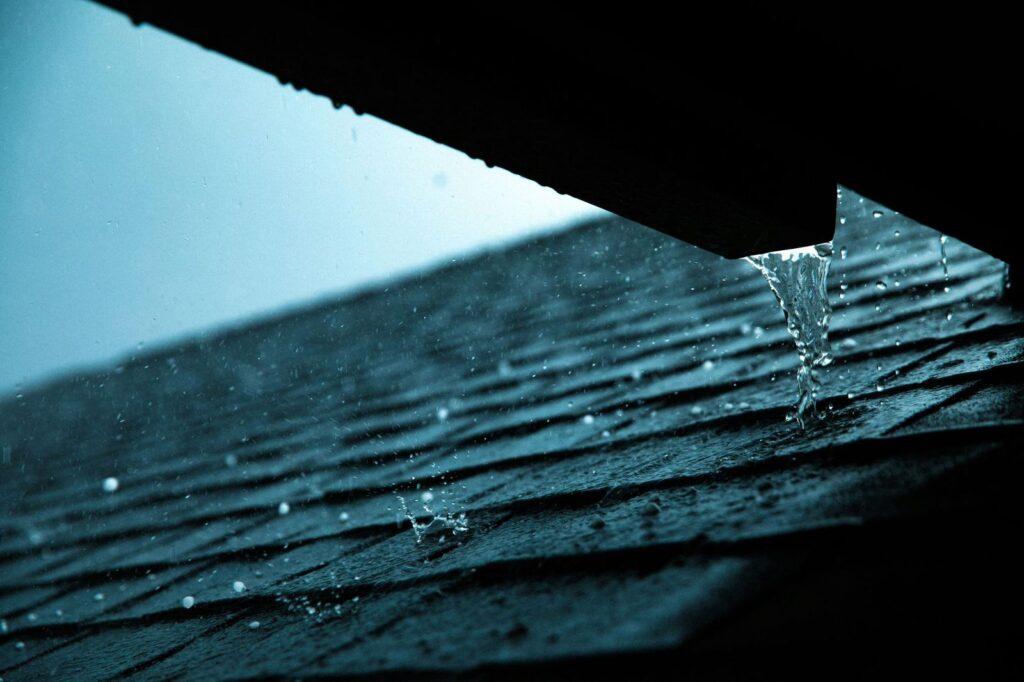
Gutters are part of the roof system, and they fail loudly during fall storms when nobody is looking. A single strong North Texas cell can drop two to three inches of rain in under an hour, and a clogged gutter simply cannot move that volume. Water backs up over the gutter lip, sheets down the fascia, and saturates the soffit, the trim, and eventually the wall assembly below. Standard 5 inch K style gutters handle most residential roofs, but homes with large roof planes, steep pitches, or long unbroken runs often need 6 inch gutters and additional downspouts to keep up. Downspout capacity matters as much as gutter width, since a gutter can only drain as fast as its outlets allow. Late summer is the right time to flush the system, check the hangers, and confirm the pitch still runs toward the outlets.
Debris load in North Texas peaks right before storm season starts. Live oaks drop leaves and catkins in spring, but pecans, elms, and cedar elms shed heavily through fall, and pine needles pack into gutter seams like felt. A gutter full of wet organic material adds serious weight, which pulls hangers loose and separates seams over time. Once the gutter sags, water pools in the low spots, and standing water accelerates corrosion at the seams and end caps. Gutter guards help in some situations, though poorly chosen guards trap fine debris on top and create their own overflow problems. Regular cleaning remains the most reliable approach for most homes in Hurst, Euless, Bedford, and the surrounding cities.
Where the water goes after it leaves the downspout is the part homeowners overlook most often. North Texas sits on expansive clay soils that swell when saturated and shrink when dry, and that movement is a leading contributor to foundation problems across the metroplex. Downspouts that discharge directly at the base of a wall concentrate thousands of gallons into the exact soil you least want to saturate. Extensions should carry water at least four to six feet from the foundation, and longer runs are better on flat lots with poor grading. Splash blocks help but rarely move water far enough on their own. Underground drain lines work well when they stay clear, so they should be flushed before storm season along with everything else. Want gutters that can handle a three inch downpour? Click here for our gutter services.
What North Texas Fall Storms Do to a Roof and How Damage Shows Up
Fall storms in North Texas produce a different damage signature than spring storms do. Spring systems tend to be larger and slower, while fall systems often move fast along a sharp frontal boundary with intense but brief wind and hail cores. That speed means damage is frequently concentrated on one or two slopes rather than spread evenly across the roof. Hail during fall events can range from pea size to golf ball size in the metroplex, with larger stones showing up in the strongest cells. Wind is often the bigger threat during these events, since gust fronts ahead of a line of storms regularly hit 50 to 70 mph. Homeowners typically notice the aftermath as scattered shingle debris in the yard, granules collecting at downspout outlets, or a new water stain on a ceiling. Recognizing what each type of damage looks like helps you respond quickly and accurately. Fast documentation also strengthens any insurance claim you decide to file.
Hail Damage From North Texas Fall Storms on Asphalt Shingle Roofs
Hail damage on asphalt shingles is often described as bruising, and the term is accurate. When a stone strikes with enough force, it fractures the fiberglass mat inside the shingle and knocks granules loose from the surface. The resulting mark feels soft and slightly indented under thumb pressure, similar to pressing on a bruise on fruit. Granule loss exposes the asphalt layer underneath to direct UV radiation, which then dries and cracks over the following months and years. This is why hail damage frequently causes leaks long after the storm itself, and why insurers evaluate functional damage rather than appearance alone. Small circular marks with exposed black asphalt scattered randomly across a slope are the classic signature. Random distribution matters, because manufacturing defects and foot traffic damage follow patterns that trained inspectors recognize immediately.
Soft metal surfaces on and around the house serve as reliable hail indicators. Gutters, downspouts, roof vents, turbine caps, air conditioning condenser fins, mailboxes, and window screens all dent before shingles show obvious damage. If the condenser fins on the side of the house facing the storm show a field of dimples, the roof almost certainly took impacts as well. Checking these surfaces from the ground gives homeowners a safe first read without climbing a ladder. Painted metal that shows bare spots at the impact points indicates larger stones and higher energy. Siding damage on the storm facing elevation tells the same story, and cracked or chipped siding often accompanies significant roof impacts. A thorough inspection covers the entire building envelope, not just the roof.
Insurance handling of hail claims in Texas has changed meaningfully in recent years. Many policies now carry separate wind and hail deductibles expressed as a percentage of the dwelling coverage, commonly one to two percent, which can translate to several thousand dollars on an average home. Some policies have also shifted roof coverage from replacement cost value to actual cash value, which pays out the depreciated value of an aging roof rather than the cost of a new one. Reading your declarations page before storm season tells you exactly where you stand and prevents an unpleasant surprise later. Texas law also sets deadlines for reporting claims, and waiting too long after a known storm date can complicate the process. Photographing your roof and gutters now creates a documented baseline. Impact resistant Class 4 shingles are worth considering at replacement time, since many Texas carriers offer premium discounts for them.
Wind Damage From North Texas Fall Storms Along Ridges and Edges
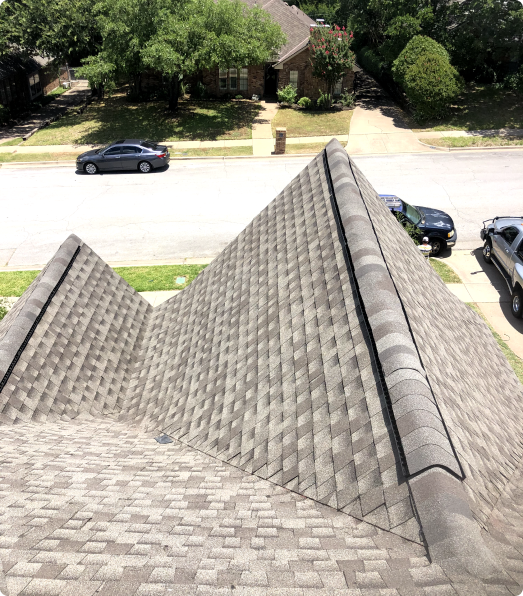
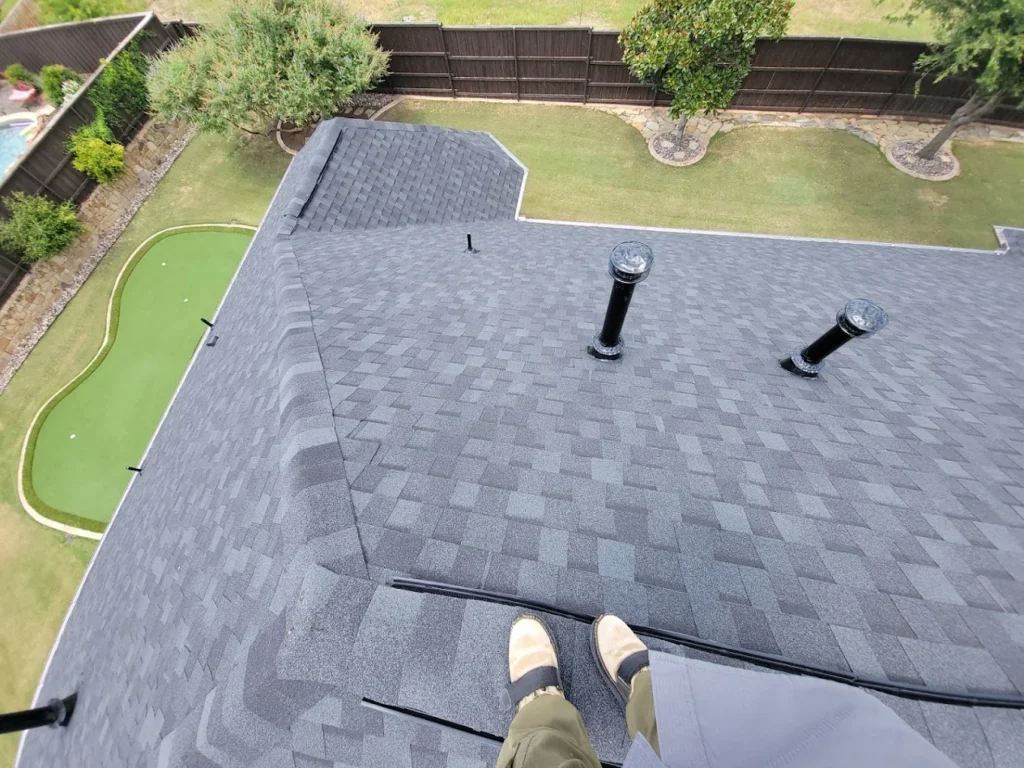
Wind does not lift a roof uniformly; it attacks edges, corners, and ridges where pressure differentials are highest. Air moving over a roof creates suction on the leeward side and along the ridge line, which is why ridge caps are so often the first component to go. Rake edges and eaves take direct uplift pressure, and any shingle with a compromised sealant bond becomes a lever for the wind to work under. Once a single tab lifts, the wind gets underneath the course above it, and the failure spreads across the slope in a matter of minutes. This is why a roof can look completely intact after one storm and lose an entire section during the next. Creased shingles are the sneaky version of this damage, since a shingle can bend, crack the mat, and then lay back down looking almost normal. Those creases fail later, usually during a rain event.
Ridge vents, turbines, and other roof mounted components create their own vulnerabilities during high wind. A ridge vent relies on properly fastened end caps and continuous nailing to stay put, and a partially loosened vent lets wind driven rain straight into the attic. Turbines can lose their spinning heads entirely, leaving an open pipe pointed at the sky. Satellite dish mounts, solar attachments, and old antenna brackets all penetrate the roof and all need sealed, secure fasteners. Any component that moves when you push on it is a component that will move in a 60 mph gust. Checking and tightening these items takes minutes and prevents a class of leak that is otherwise very hard to trace.
Trees are the wind related risk that homeowners control most directly. Limbs overhanging a roof abrade shingles every time the wind blows, wearing granules off in long streaks along the contact path. Larger limbs break during storms and can puncture decking outright, and even a moderate branch strike can dislodge a section of shingles. Arborists generally recommend keeping limbs trimmed back at least six to ten feet from the roof surface where the tree structure allows it. Trimming also reduces leaf load in the gutters and cuts down on the moss and algae growth that shaded, damp roof sections develop. Dead or declining trees near the house should be evaluated by a professional before storm season, since fall wind events regularly bring down compromised limbs. The work is cheaper than a puncture repair and considerably cheaper than replacing a roof section.
Water Intrusion After North Texas Fall Storms Inside the Attic
The attic tells the truth about a roof faster than the exterior does. After any significant storm, a homeowner should take a flashlight into the attic and look at the underside of the decking, the rafters, and the insulation. Fresh water intrusion appears as dark, damp staining, and older leaks leave dried rings with defined edges. Daylight visible through the decking anywhere other than the intentional vents indicates a hole that needs immediate attention. Wet insulation compresses and loses its thermal value permanently, so any saturated batts or matted blown insulation should be replaced rather than dried in place. Checking around every penetration, along the valleys, and at the wall to roof transitions covers the highest probability locations.
Leaks rarely announce themselves where they enter. Water follows the path of least resistance, traveling along rafters, down truss webs, and across the top of the ceiling drywall before it finally shows up as a stain. That means a stain in the middle of a bedroom ceiling might originate from a pipe boot fifteen feet away near the ridge. Tracing a leak accurately requires following the moisture trail uphill to its actual source, which is why guessing at the entry point so often leads to repeated failed repairs. Professional leak detection uses attic inspection, water testing, and sometimes moisture meters or thermal imaging to pinpoint the origin. Fixing the right hole the first time saves both money and ceiling drywall.
Moisture that lingers in an attic creates secondary problems that outlast the leak. North Texas humidity climbs through fall, and a damp attic with poor ventilation becomes an ideal environment for mold growth on the underside of the decking. Repeated wetting also delaminates plywood sheathing, causing the layers to separate and lose structural strength, which shows up later as a spongy or wavy roof surface. Wet framing attracts wood destroying insects and can compromise fastener holding power over time. Addressing intrusion quickly, drying the space thoroughly, and correcting the ventilation deficiency together prevent the cascade. Homeowners who find water after a storm should document everything with photos and dates before any repair work begins. That record supports the claim and gives the contractor a clear picture of what happened.
Why You Need a Storm Ready Roof Before the First Strong Cold Front
Waiting until after a storm to think about the roof puts you at the back of a very long line. When a hail core tracks across Grapevine, Keller, or North Richland Hills, thousands of homes need inspections within the same week, and reputable local contractors book solid almost immediately. Storm chasing outfits flood the area during those windows, and homeowners under pressure sign contracts with companies that will not be around for the warranty. Preparing ahead removes that pressure entirely and lets you choose a contractor on your own timeline. It also means your roof enters the season in the strongest possible condition, which reduces the odds of damage in the first place. The difference between a maintained roof and a neglected one shows up most clearly on the day the wind hits 65 mph.
Why a Storm Ready Roof Protects Your Insurance Claim
Insurance carriers distinguish between sudden storm damage and long term wear, and that distinction determines what gets paid. A roof with documented maintenance and recent photos presents a clean case that the damage came from a specific weather event. A roof with years of deferred repairs, exposed nails, and failed sealant gives an adjuster room to attribute the loss to age and neglect. Keeping receipts, inspection reports, and dated photographs creates a paper trail that supports your position. Preparation is not just physical work on the roof; it is the record you build alongside it.
Knowing your policy terms before a storm is equally important. Percentage based wind and hail deductibles, actual cash value roof endorsements, and cosmetic damage exclusions all change what you can realistically expect to recover. Reviewing the declarations page takes twenty minutes and prevents a costly misunderstanding at the worst possible moment. Homeowners who understand their coverage make faster and better decisions in the days after a storm. That clarity also helps you evaluate contractor proposals accurately.
Working with a contractor experienced in insurance claims makes the process significantly smoother. Adjusters and roofers speak different languages about scope, and having someone who can document damage properly and meet the adjuster on site protects your interests. Proper documentation includes slope by slope test squares, photos of soft metal indicators, and accurate measurements. Claims get denied or underpaid regularly because the damage was never documented correctly in the first place. Need help understanding storm damage on your roof? Click here for our roofing services.
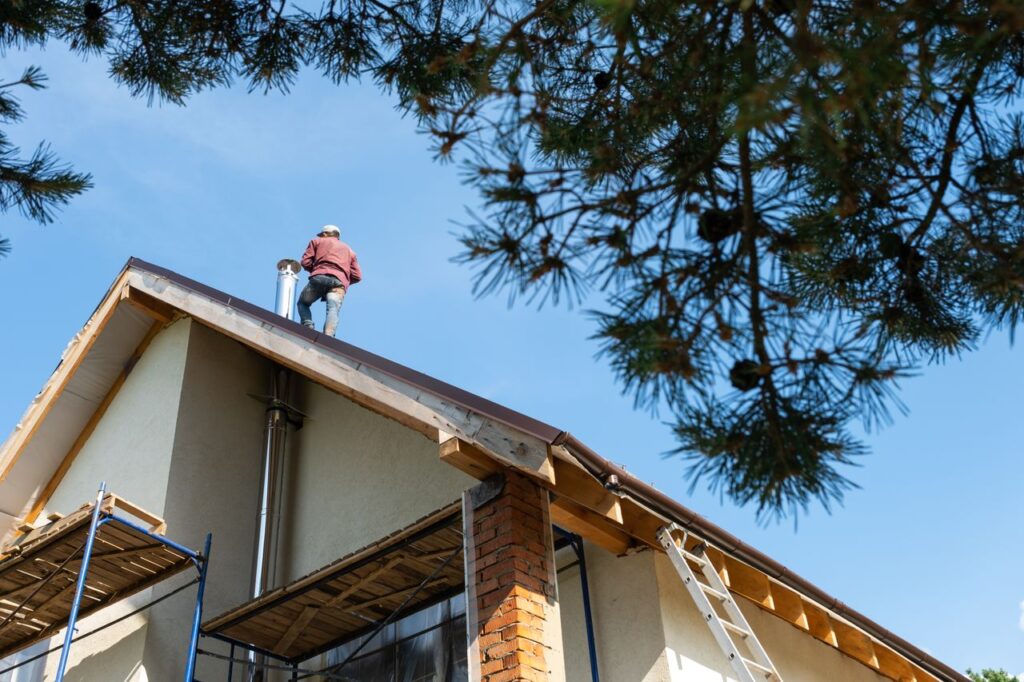
Why Scheduling Roof Storm Prep Early Beats Waiting for the Damage
Material availability shifts fast after a major North Texas hail event. Suppliers across the metroplex draw down inventory within days, and specific shingle colors and profiles can go on backorder for weeks. Homeowners who scheduled work in advance get the material and the color they actually wanted. Those who wait often accept substitutions just to get a roof back on the house. Timing is leverage, and preparation gives you all of it.
Labor scarcity follows the same pattern and hits harder. Established local crews commit to existing customers first, and the overflow gets absorbed by transient companies with no local address and no track record. Warranty service from those companies is essentially theoretical once they leave the region. Choosing a contractor before the storm means choosing based on reputation and workmanship rather than availability. That single decision determines the quality of your roof for the next two decades.
Cost is the third factor, and it moves in the same direction as everything else. Emergency tarping, water mitigation, drywall repair, and insulation replacement all stack on top of the roof work itself. A cracked pipe boot replaced in August costs a fraction of the ceiling repair it prevents in November. Preventive work is predictable, schedulable, and far less disruptive to your household. Is your siding ready for wind driven rain and hail? Click here for our siding services.
Why Choose TM Roofing & Construction Group for Fall Storm Roof Prep
TM Roofing & Construction Group is locally owned and operated out of Bedford, which means our crews live in the same neighborhoods they work in. We back our work with lifetime manufacturer warranties and a 10 year workmanship guarantee, and we are still here when you need that guarantee honored. More than 600 Facebook reviews and BBB accreditation reflect years of work across Tarrant and Denton counties. We treat every home like our own because our reputation in this community depends on it. That standard does not change based on how busy the storm season gets.
Insurance claims are a core part of what we do, not an afterthought. Our team documents damage thoroughly, meets adjusters on site, and puts $500 toward your deductible to reduce your out of pocket cost. We explain the process in plain terms so you always know where your claim stands. Flexible financing options are available for homeowners handling repairs outside of a claim. Free estimates mean there is no cost to find out exactly what condition your roof is in.
We are available 24 hours a day, seven days a week, because North Texas storms do not keep business hours. From Bedford and Hurst to Southlake, Flower Mound, Denton, and Arlington, our crews respond quickly when a front moves through. Getting your roof inspected now is the simplest way to head off a much larger problem later this fall. Call TM Roofing & Construction Group at (817) 820-9596 to schedule a free roof inspection and get your home ready before the next storm arrives.