The Homeowners Guide to Rotting Fascia and Soffit
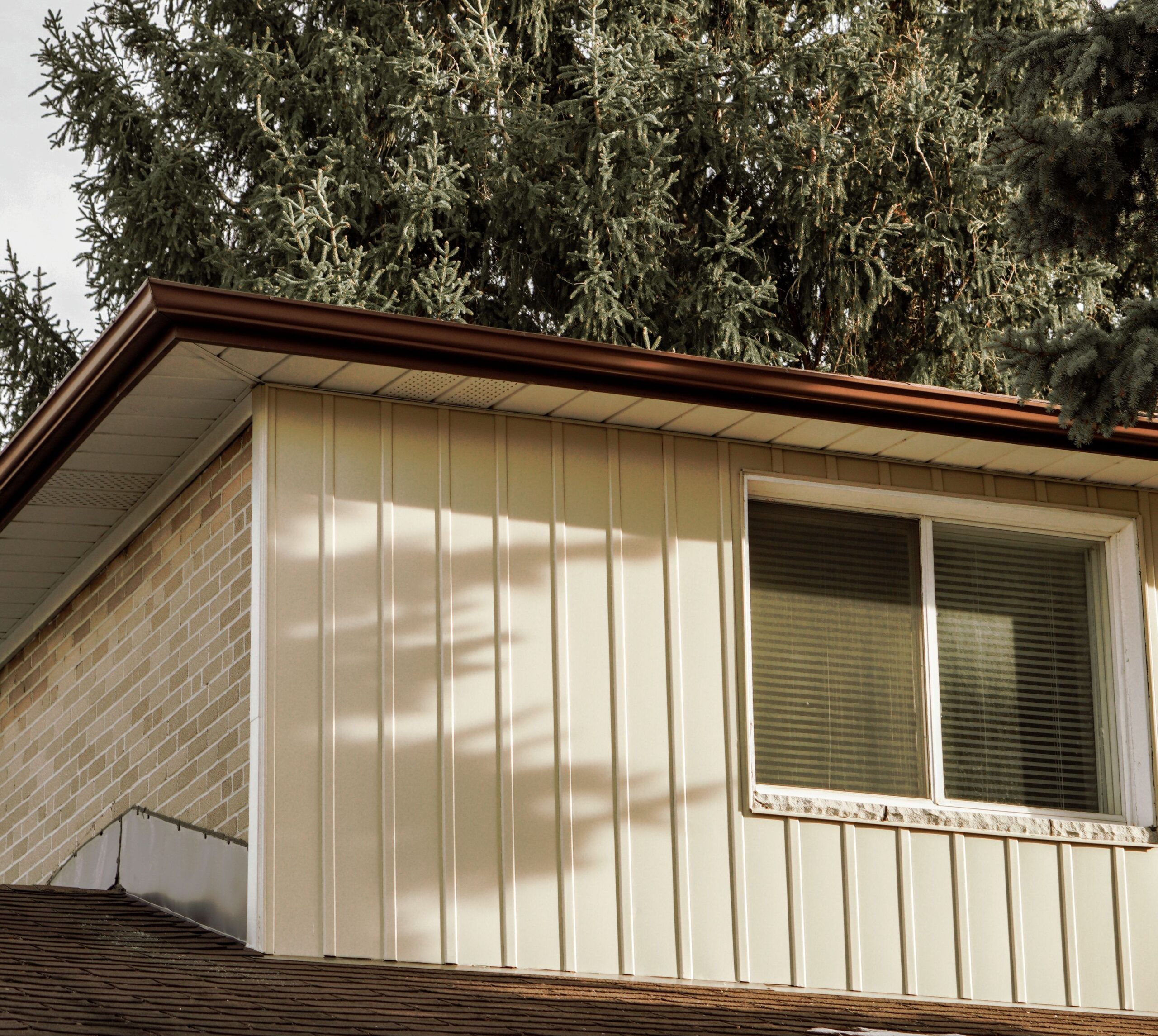
Fascia and soffit sit at the lowest edge of your roof, and they take more abuse than almost any other part of a house in North Texas. The fascia is the vertical board that runs along the roof edge and carries the weight of your gutters, while the soffit is the horizontal panel that closes off the underside of the eave and feeds fresh air into your attic. Late summer humidity, months of afternoon storms, and the leaf drop that arrives every fall combine to trap moisture right where these boards meet, and wood that stays damp for more than a few days begins to break down at the cellular level. Most homeowners never look up at their eaves until paint starts peeling or a piece of trim sags, and by that point the damage has usually traveled further than the visible spot suggests. Rot at the eave is not a cosmetic problem; it is a structural and ventilation problem that affects your roof decking, your rafter tails, your attic temperature, and your monthly energy costs. The good news is that fascia and soffit damage follows predictable patterns, which means a homeowner who knows what to look for can catch it early and keep a small repair from turning into a rebuilt roof edge. Understanding why these boards fail, how to spot the warning signs from the ground, and when to bring in a roofing contractor gives you real control over the health of your home.
What Causes Rotting Fascia and Soffit on North Texas Homes
Rotting fascia and soffit almost always trace back to water that had somewhere to go and was not allowed to get there. Wood needs sustained moisture content above roughly twenty percent before decay fungi can take hold, and in a humid Dallas Fort Worth summer that threshold is easy to cross when drainage or airflow fails. The three most common culprits are overflowing gutters, blocked attic ventilation, and roof leaks that travel down the deck to the eave before showing up anywhere else. Each of these creates a different signature of damage, so identifying the source matters just as much as replacing the board. Homes with original wood fascia from the 1970s through the 1990s are especially vulnerable because builders of that era often used untreated pine or fir and primed only the face that was visible from the street. Replacing rotted wood without correcting the water source guarantees the same failure will return within a few seasons.
How Clogged Gutters Cause Rotting Fascia Boards
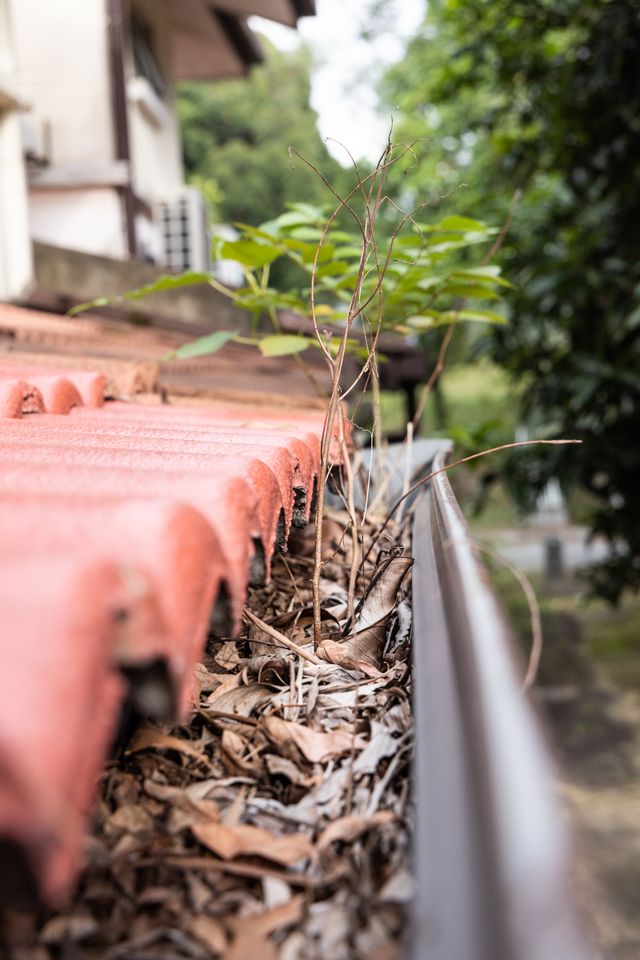
Your gutters hang directly on the fascia, which means every ounce of water they mishandle lands on the one board least able to survive it. When leaves, shingle granules, and windblown debris pack the trough, water backs up and spills over both the front lip and the rear edge of the gutter. The spillover at the rear is the dangerous one, because that water runs straight down the face of the fascia and behind the gutter where sunlight never reaches and airflow is almost nonexistent. Over a full storm season, that board absorbs and releases moisture dozens of times, and each cycle loosens the paint film a little further until bare wood is exposed. Once the coating fails, the wood soaks up water like a sponge and holds it against the metal gutter hangers, which accelerates both fungal decay and fastener corrosion. Homeowners in Bedford, Colleyville, and Grapevine deal with heavy oak and pecan leaf drop every October, and gutters that were fine in August can be completely blocked by Thanksgiving. Sagging gutter sections are often the first visible clue that the fascia behind them has already softened enough to lose its grip on the spikes or hidden hangers.
Gutter pitch and downspout placement play just as large a role as debris. A gutter run needs roughly a quarter inch of fall for every ten feet of length so that standing water drains completely between rainfalls, and a run that was installed level or backpitched will hold a shallow pool indefinitely. That standing water adds substantial weight, pulls the gutter away from the fascia at the fasteners, and opens a gap where wind driven rain gets behind the system. Downspouts that dump onto a lower roof section rather than into a proper kickout or extension will also concentrate water at a single eave, saturating a few feet of fascia far faster than the rest of the run. Undersized downspouts create the same problem in a different way, since a two by three inch outlet simply cannot move the volume that a North Texas thunderstorm delivers in twenty minutes. When water cannot exit fast enough, it finds the path of least resistance, and that path is almost always over the back edge onto your trim. Correcting the pitch, upsizing the outlets, and adding proper extensions solves more fascia problems than any amount of board replacement ever will.
The connection between the gutter and the roof edge deserves special attention because it is the detail most often missed on older homes. A properly built roof edge includes a metal drip edge flashing that extends out over the fascia and directs runoff into the gutter rather than allowing it to curl back under the shingle and wick into the wood. Many houses built before drip edge became standard practice have shingles hanging past bare wood with nothing but a painted surface protecting the top of the fascia board. Water follows the underside of that overhanging shingle through surface tension, contacts the top edge of the board, and soaks into end grain that was never sealed at the factory or on site. End grain absorbs moisture many times faster than a flat face, so rot frequently starts at the top edge and works downward while the painted front still looks perfectly sound. If your gutters overflow, sag, or have never been cleaned this year, click here for our seamless gutter services and let us evaluate the drainage before the fall leaves arrive.
Why Poor Attic Ventilation Causes Rotting Soffit Panels
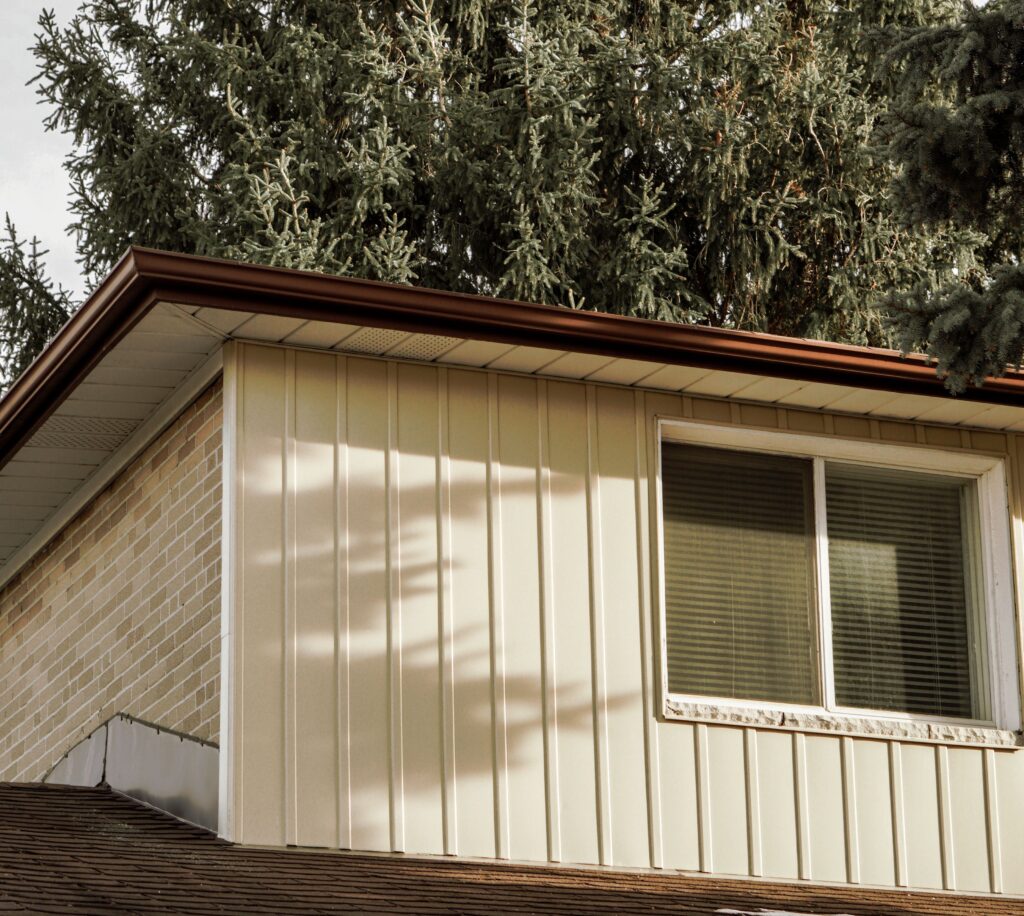
Soffit panels do more than cover the underside of your eave; on nearly every modern roof they serve as the intake half of a balanced ventilation system. Ridge vents, turbines, and box vents near the peak pull warm air out of the attic, and that air has to be replaced by cooler outside air drawn in through vented soffit panels along the eaves. A balanced system generally provides one square foot of net free ventilation area for every one hundred fifty square feet of attic floor, split close to evenly between intake at the bottom and exhaust at the top. When the intake side is blocked, the exhaust vents cannot function as designed and the attic becomes a sealed box full of hot, moisture laden air. In a Texas August that attic can exceed one hundred fifty degrees, and the humidity that rides in with every storm has no way to escape. Moisture then condenses on the coolest surfaces it can find, which are usually the shaded soffit panels and the rafter tails directly above them.
Blown insulation is the most frequent cause of blocked intake, and it happens silently. Attic insulation installed without baffles or chutes at the eaves tends to slump down over time and pack itself tightly into the space between the top plate and the roof deck, sealing off the airflow path completely. Homeowners who add a second layer of insulation to fight rising energy bills often make the problem worse, burying the vent channel under another eight or ten inches of loose fill. The result is an attic that runs hotter, shingles that age faster from underneath, and eave framing that stays perpetually damp during humid stretches. Painted or solid soffit panels installed during a previous siding project create the same failure, since replacing vented panels with continuous solid material eliminates the intake area entirely. Once airflow stops, wood at the eave stays above the moisture threshold for weeks at a time and decay organisms do exactly what they evolved to do.
The damage pattern from ventilation failure looks different from gutter overflow damage, and knowing the difference helps you and your contractor find the real problem. Ventilation related rot typically begins on the interior side of the soffit and the underside of the roof deck rather than on the exposed painted face, so the panel may look acceptable from the driveway while the framing behind it is already compromised. You may notice dark staining on the plywood near the eaves when you look into the attic with a flashlight, or a musty smell that gets stronger as you move toward the perimeter. Nail points protruding through the deck sheathing sometimes show rust or beads of condensation during humid mornings, which is a reliable indicator of trapped moisture. Fixing this correctly requires clearing the insulation back, installing rigid baffles at every rafter bay, and restoring genuine vented soffit with adequate net free area rather than decorative perforations that barely breathe. Correcting the airflow protects your new soffit, extends shingle life, and usually lowers cooling costs at the same time.
How Roof Leaks and Storm Damage Cause Rotting Fascia and Soffit
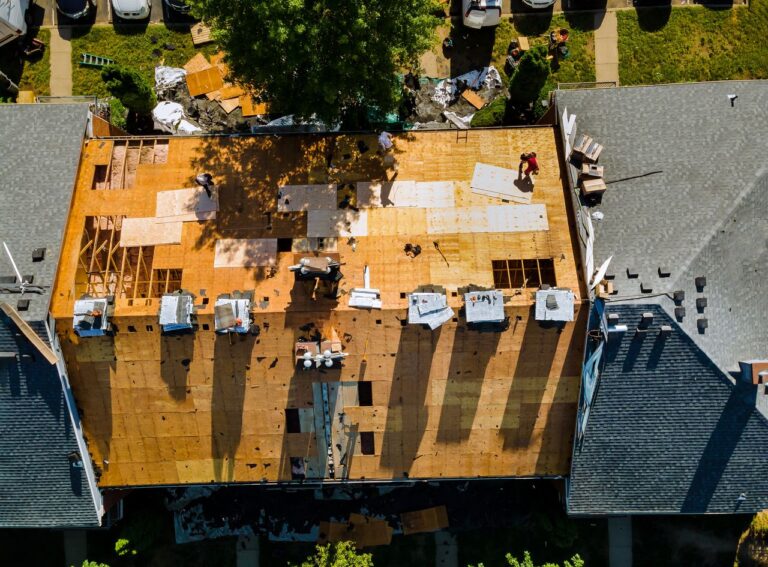
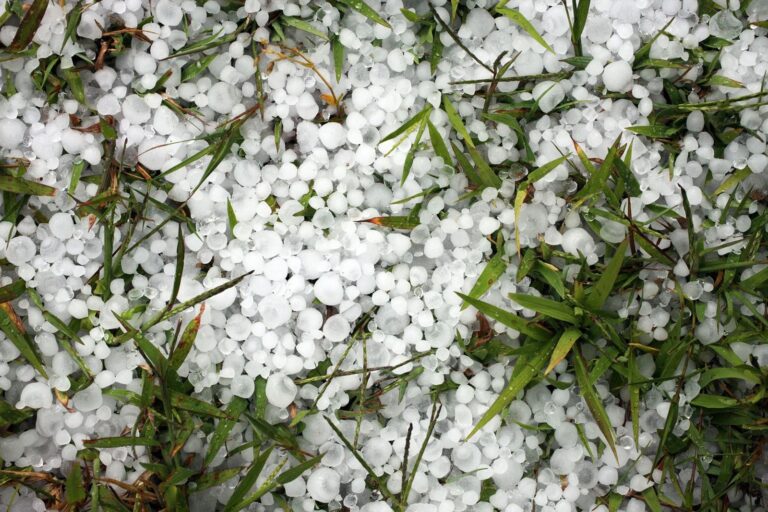
Water that enters through the roof field rarely stays where it started. Gravity carries it down the slope of the decking along the underside of the plywood, and the first place it can escape or pool is the eave, which means a leak near the ridge can rot fascia thirty feet away. This is why homeowners are so often surprised when a contractor traces peeling soffit paint back to a failed pipe boot or a lifted shingle nowhere near the affected corner. Hail damage accelerates the process by fracturing the mat of asphalt shingles and knocking away the protective granule layer, which allows ultraviolet light and rain to reach the underlying materials. North Texas sees some of the most frequent and severe hail in the country, and a storm that leaves a roof looking mostly intact from the ground can still shorten its service life by a decade. Wind damage does similar work by breaking the sealant bond between shingle courses, creating a hinge that lifts with every gust and drives rain up under the course above.
The eave assembly is also uniquely exposed to wind driven rain during the strong straight line events that roll through the metroplex each spring and fall. Rain moving horizontally at fifty miles per hour does not respect the shingle overhang, and it pushes water up and behind the drip edge into the gap between the fascia and the rafter tails. Homes with wide overhangs and open eave returns catch even more of this water because the geometry funnels it inward. Once moisture reaches the space between the fascia and the framing, there is no ventilation, no sunlight, and no drainage to remove it. That pocket becomes a small greenhouse where fungal growth can continue quietly for years while the exterior paint remains presentable. By the time a fastener pulls loose or a section of trim visibly bows outward, the rafter tail behind it has often lost enough material to require sistering or partial replacement.
Older flashing details fail in ways that specifically target the roof edge as well. Valley terminations that dump concentrated runoff at the eave, missing kickout flashing where a roof meets a sidewall, and step flashing that was reused during a previous reroof all deliver water to places it was never meant to go. A missing kickout is particularly destructive because it sends an entire valley’s worth of water behind the siding and down into the fascia and wall assembly rather than into the gutter. Insurance carriers regularly cover storm related damage to fascia, soffit, and the underlying decking when it is documented properly as part of a roof claim, but only if the damage is identified and tied to a covered event. A thorough inspection distinguishes storm damage from ordinary wear and gives you the documentation you need. If a recent storm left you wondering about the condition of your roof edge, click here to learn about our residential roofing services and schedule a free evaluation.
Signs of Rotting Fascia and Soffit Every Homeowner Should Check
You do not need a ladder or specialized tools to catch most fascia and soffit problems in their early stages. A slow walk around the perimeter of your house with a pair of binoculars will reveal the majority of warning signs, especially if you do it twice a year in spring and fall. What you are looking for is any deviation from a straight, evenly painted, tightly fitted line where the roof meets the wall. Rot announces itself through changes in shape, color, and texture long before a board actually falls apart. Pay particular attention to corners, valley terminations, and the areas directly below any roof penetration, since those spots collect the most concentrated runoff. Checking the attic from the inside on a bright day adds a second layer of information that the exterior view cannot provide.
Visual Signs of Rotting Fascia Boards Along the Roof Edge
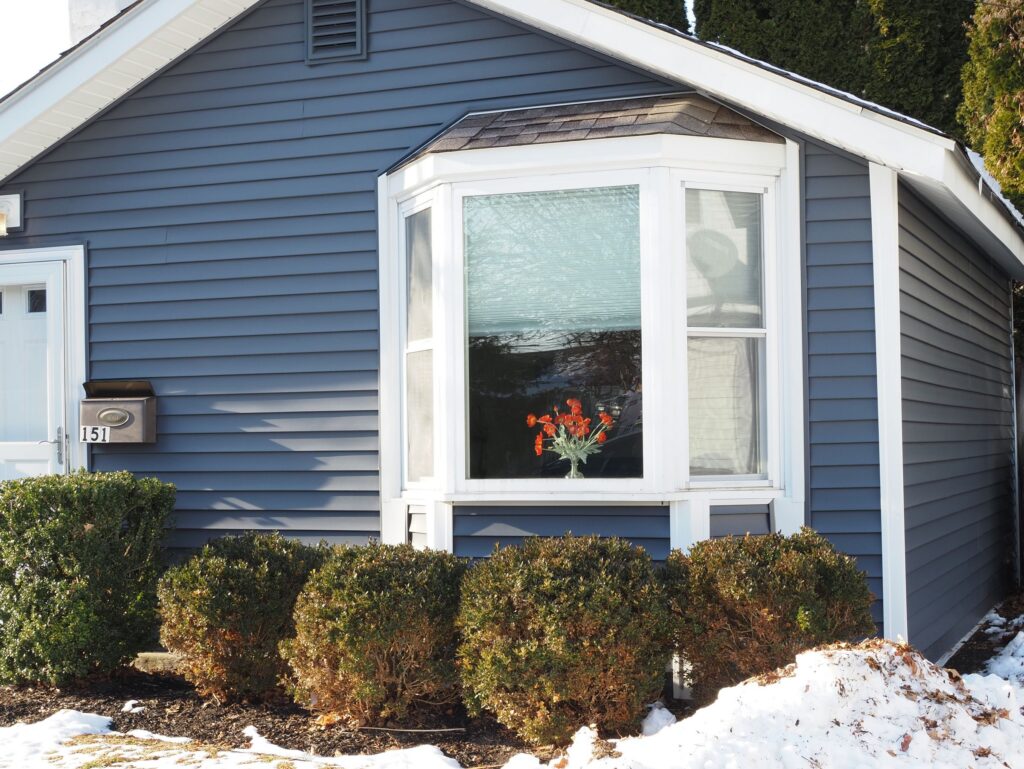
Peeling, blistering, or bubbling paint on a fascia board is the earliest and most reliable exterior signal, and it means moisture is escaping from behind the coating rather than landing on top of it. Paint fails from the inside out when wood beneath it holds water, so a board that looks freshly painted on one section and badly blistered on another is telling you exactly where the water is entering. Look for a wavy or bellied profile along the run, since sound lumber holds a straight line and rotted lumber softens and deflects under the weight of a loaded gutter. Dark gray or black staining that will not wash off usually indicates fungal growth rather than dirt, and green streaking points to sustained dampness that supports algae. Gaps opening at the joints between board sections show that the wood has swollen, shrunk, and lost its dimensional stability. Rusty streaks running down from gutter hangers or nail heads mean fasteners have been sitting in wet wood long enough to corrode, which also means those fasteners no longer hold the way they should.
Movement is the second category of visual evidence, and it is easy to check from ground level. A gutter that has pulled away from the house even a half inch at one end, or a section that visibly dips between hangers, is almost always attached to compromised wood. Fascia that has separated from the rafter tails leaves a shadow line at the top edge where the shingle overhang no longer sits tight against the board. On homes with aluminum or vinyl fascia wrap, the metal itself hides the wood underneath but rarely hides the symptoms, since the wrap will dimple, buckle, or show water stains at the seams when the substrate has failed. Wrapped fascia can actually accelerate decay when it was installed over wood that was already damp, because the covering traps moisture and blocks evaporation. If your fascia is wrapped and your gutters have ever overflowed, assume the wood needs a physical inspection rather than a visual one. A contractor can probe a small area to check firmness without damaging the covering.
Texture testing confirms what your eyes suspect, though it requires safe ladder access or a professional visit. Sound wood resists a screwdriver tip with a solid, springy feel, while rotted wood accepts the tip with almost no pressure and crumbles rather than splinters. Fascia that has gone spongy is no longer capable of holding gutter fasteners, supporting the shingle overhang, or resisting wind uplift at the roof edge. Soft spots concentrated at the ends of boards point to end grain absorption and missing drip edge, while soft spots in the middle of a run usually match up with a downspout, a valley, or a chronic gutter clog above. Once the softness extends more than an eighth of an inch deep, filler and paint will not restore strength and the section needs replacement. Documenting where the soft areas fall gives your contractor a map of the water source, which is the information that makes the repair permanent.
Interior and Attic Signs of Rotting Soffit Panels
The attic tells a story that the exterior cannot, and it costs nothing to look. Choose a bright midday and climb far enough into the attic to see the perimeter where the roof deck meets the top plate of the wall, using a flashlight even in daylight. Pinpoints of daylight visible at the eaves are normal only where you have functioning vents; light coming through gaps, splits, or missing panel edges means the assembly is open to weather and pests. Dark rings or streaks on the underside of the roof deck near the eave indicate repeated wetting, and blackened plywood that flakes when you touch it has already lost structural value. Water stains on the top plate or on insulation near the perimeter show that moisture has traveled inside the wall cavity. Compressed or discolored insulation at the eaves is a strong sign that the intake vents are blocked and that condensation has been forming in that area.
Temperature and humidity are diagnostic tools in their own right. An attic that feels dramatically hotter than the outdoor air on a summer afternoon, or one that stays humid and heavy long after a storm has passed, is not exchanging air the way a balanced system should. Frost on nails during a rare hard freeze, condensation droplets on the underside of the sheathing during a humid morning, or a persistent musty odor all confirm trapped moisture. Rising cooling costs across consecutive summers with no change in habits often trace back to a ventilation failure at the soffit rather than to the air conditioning system itself. Homeowners frequently spend money on a new unit when the actual problem was blocked intake at the eaves overloading the equipment. Checking the soffit vents from below is the simple companion test; hold your hand near a vented panel on a windy day and look for any perceptible movement of air. Panels that have been painted so many times the perforations are sealed shut are surprisingly common on homes that have changed hands several times.
Interior symptoms inside the living space appear last but should never be ignored. Water stains on the ceiling within a foot or two of an exterior wall, crown molding that has separated at the corners, or paint that bubbles along the top of a wall all suggest water entering at the eave rather than in the middle of the roof. Ceiling texture that feels soft, or a light fixture near the perimeter that shows any moisture, calls for immediate attention. Persistent mildew in a closet or corner room that shares a wall with the eave often reflects humidity migrating down from an attic that cannot breathe. These interior signs mean the problem has progressed past the trim boards and into assemblies that cost far more to repair. Catching the pattern early keeps the work confined to the roof edge where it is straightforward and affordable.
Pest and Animal Signs That Point to Rotting Fascia and Soffit
Softened wood at the eave is an open invitation to a long list of pests, and their activity is often the first thing a homeowner actually notices. Squirrels and rats need only a gap of an inch and a half to enter an attic, and rotted fascia gives them a starting point they can chew through in minutes. Scratching or scurrying sounds overhead in the early morning or at dusk usually means something has found a soft entry along the roof edge. Birds, particularly starlings and sparrows, work their way behind loose soffit panels to nest, and their droppings and nesting material hold moisture against the wood year round. Woodpeckers drill into fascia both to reach insects living in decayed wood and to establish territory, so a row of holes in a specific board is a strong indicator that the wood is already infested. Wasp and hornet nests tucked into eave corners take advantage of gaps that only open when trim has begun to separate.
Insects that consume wood directly follow moisture, and their presence confirms a chronic problem rather than a passing one. Carpenter ants do not eat wood for nutrition, but they excavate galleries in softened lumber to nest, which means finding them at your eaves points to material that is already damp. Small piles of what looks like sawdust on a windowsill, walkway, or porch below the eave are frass from that excavation. Termites in North Texas are more commonly subterranean and attack from the ground, though damp fascia and soffit are perfectly acceptable to them when a moisture bridge exists. Powderpost beetles leave tiny round exit holes in a pattern that resembles a shotgun blast. Any of these findings should prompt both a pest evaluation and a moisture correction, since treating the insects without drying the wood simply resets the clock.
Pest damage compounds the underlying rot in ways that make repair more urgent and more expensive. Every hole a bird or rodent makes becomes another entry point for rain, and nesting material blocks whatever ventilation the soffit still provided. Animals in the attic contaminate insulation, chew wiring, and can create fire and health hazards well beyond the cost of the trim work. Sealing an eave without removing the occupants traps them inside, so the repair sequence matters and should be coordinated properly. A roofing contractor who understands the eave assembly can rebuild the fascia and soffit with tight fitting materials, proper vented panels, and sealed penetrations that keep animals out permanently. Because the soffit ties directly into your exterior wall system, damage at the eave often extends into adjacent trim and siding; click here to explore our siding and exterior services if you have noticed problems below the roofline as well.
Why You Need Professional Fascia and Soffit Repair Before Fall Storm Season
Late summer is the ideal window to address rotting fascia and soffit in North Texas because the work happens before autumn leaf drop overwhelms your gutters and before the fall storm pattern sets in. Wood that is already soft will absorb far more water during the first heavy rain of the season, and every week of delay expands the repair footprint from trim boards into decking and rafter tails. A professional repair does more than swap out damaged lumber; it corrects the drainage, restores the ventilation, and closes the gaps that let water and animals in. Doing that work now means your roof edge is sound and your gutters are anchored to solid material when the weather turns. It also gives you time to file and process an insurance claim if the damage traces back to a covered storm event. Waiting until a board falls or a gutter section pulls loose almost always costs more and offers fewer options.
Why Fascia and Soffit Repair Protects Your Entire Roof System
The eave is where three systems meet, and a failure there affects all of them at once. Your fascia carries the gutters, your soffit feeds the attic ventilation, and your drip edge protects the terminating course of shingles, so compromised wood undermines drainage, airflow, and weather resistance simultaneously. Roof decking that stays damp at the perimeter loses its ability to hold nails, which reduces the wind resistance of the entire shingle field starting at the most vulnerable edge. Manufacturers also require adequate ventilation as a condition of their material warranties, and blocked soffit intake can void coverage on a roof that is otherwise performing well. Repairing the eave correctly protects the investment you have already made in your roof.
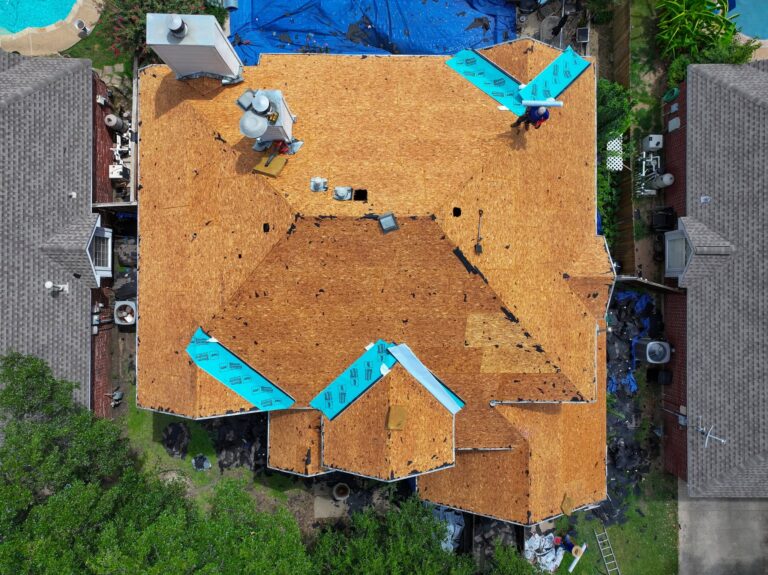
A proper repair follows a specific sequence that addresses cause before symptom. Our crews remove the damaged material back to sound framing, evaluate the rafter tails and deck edge, and replace anything that has lost structural integrity rather than covering it. New fascia gets primed on every face and edge, including the cut ends, because unsealed end grain is where the next failure would otherwise begin. We install or correct the metal drip edge so runoff is directed into the gutter instead of curling back onto the wood. Vented soffit panels are sized to deliver the intake area your attic actually requires, with baffles installed at the rafter bays to keep insulation from blocking the path.
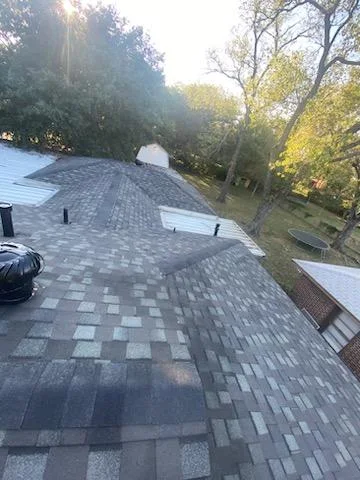
The finished result should be invisible in the best possible way, blending into the existing rooflines while performing better than what was there before. Gutters get rehung on solid lumber with hangers spaced to carry a full load of water, and pitch is checked so the run drains completely between storms. Material choices matter as well, and we discuss options such as primed wood, fiber cement, and PVC trim based on your budget and how much maintenance you want to take on. Every penetration and seam is sealed to keep birds, rodents, and insects out of the assembly. When the drainage, the ventilation, and the flashing all work together, the eave stops being the weak point of your house.
Why Fascia and Soffit Repair Should Happen Before Fall Storm Season
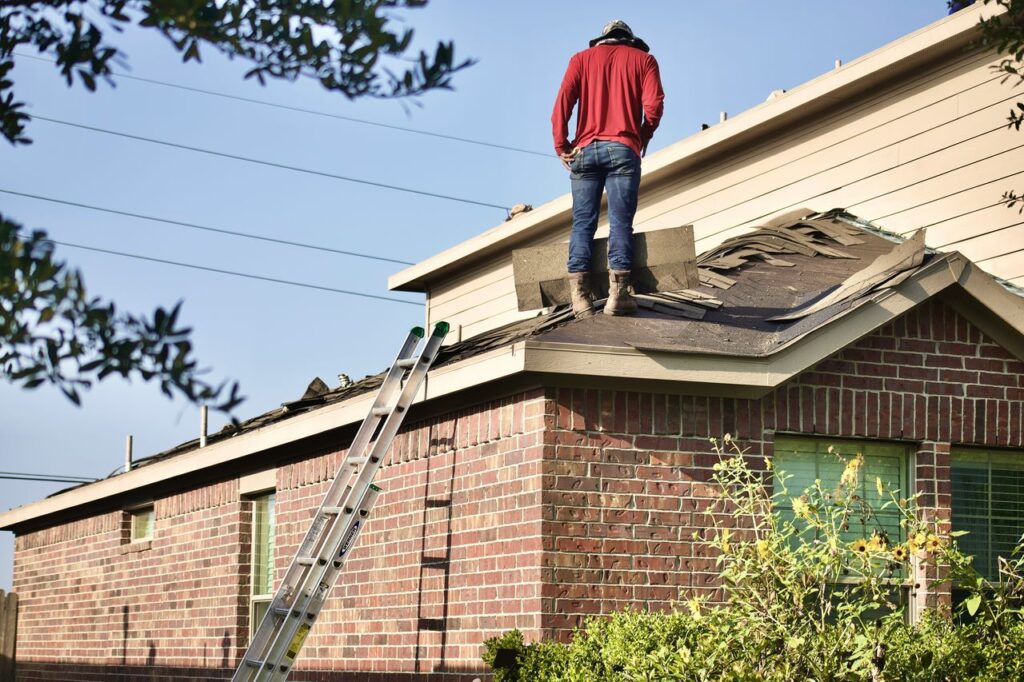
North Texas fall weather brings two challenges at once, and both of them punish a weakened roof edge. Oak, pecan, and elm leaves fill gutters quickly through October and November, and a clogged gutter sitting on soft fascia is the exact combination that turns minor decay into board replacement. At the same time, the transition seasons deliver strong frontal systems with high wind and driving rain that test every fastener and flashing detail on your roof. Repairs completed now mean your gutters are anchored to solid wood and your drip edge is directing water where it belongs when those systems arrive. Scheduling in late summer also avoids the backlog that follows every major storm event.
There is a practical financial argument for acting early as well. Insurance carriers generally cover sudden damage from a specific event but exclude damage that developed gradually from deferred maintenance, and the longer a leak runs the harder it becomes to demonstrate the storm connection. Documenting the condition of your fascia, soffit, and roof now creates a baseline that supports any future claim. Our team handles insurance claims regularly and knows how to document eave damage in a way that adjusters accept. We also contribute five hundred dollars toward your deductible on qualifying claims, which reduces what comes out of your pocket.
Comfort and operating cost improvements arrive alongside the structural benefits. Restoring intake ventilation at the soffit lets your attic exhaust heat the way it was designed to, which lowers attic temperatures during the remaining weeks of Texas summer and reduces the load on your air conditioning. A drier attic also protects your insulation, since compressed or damp insulation loses a significant share of its rated performance. Sealing the eave keeps rodents and birds from establishing themselves before cooler weather drives them to look for shelter. These are benefits you feel every month rather than only during a storm.
Why Choose TM Roofing and Construction Group for Fascia and Soffit Repair
We are locally owned and operated out of Bedford, and we treat every house we work on the way we would treat our own. That approach has earned us more than six hundred reviews on Facebook and accreditation with the Better Business Bureau, both of which reflect years of showing up when we said we would and doing the work correctly the first time. We serve homeowners across the metroplex including Colleyville, Grapevine, Southlake, Keller, Hurst, Euless, Irving, Arlington, Flower Mound, Lewisville, and the surrounding communities. Our crews understand how North Texas weather specifically attacks a roof edge, because we repair the results of it every week. Local knowledge is not a marketing line for us; it is the reason our repairs hold up.
Our work is backed by lifetime manufacturer warranties on qualifying materials and a ten year workmanship guarantee, so you are covered on both the products we install and the way we install them. We provide free estimates, offer flexible financing, and are available twenty four hours a day, seven days a week when a storm creates an urgent problem. Insurance claims are a core part of what we do, and we walk homeowners through documentation, adjuster meetings, and scope disputes so nothing gets overlooked. We give you a clear explanation of what we found, what needs to be replaced, and what it will cost before any work begins. No pressure, no surprises, and no repairs you do not actually need.
If your gutters are sagging, your eave paint is peeling, or you have heard something moving around above your ceiling, the fascia and soffit are the first place to look and the easiest place to fix while the damage is still contained. A short inspection now can save you from replacing decking and rafter tails next spring. We will assess your roof edge, your drainage, and your attic ventilation together, since those three things fail as a unit and have to be repaired as a unit. Call TM Roofing and Construction Group at (817) 820-9596 to schedule your free inspection, or stop by our office at 1301 Schumac Ln, Bedford, TX 76022. We will get your roof edge solid before the leaves fall and the next front rolls through.